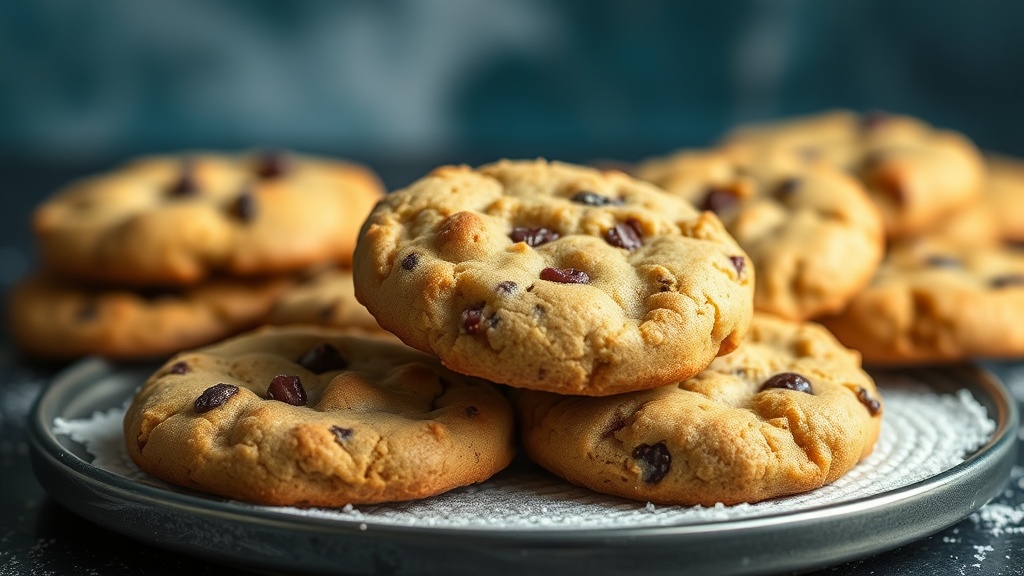
Why Your Cookies Are Too Flat and Spreading Too Much

You pull a tray of cookies out of the oven expecting thick, chewy mounds, but instead, you find a single, continuous sheet of golden dough covering your baking sheet. This common frustration usually stems from a breakdown in temperature control, ingredient ratios, or the physical state of your fats. Understanding the mechanics of spread is essential if you want consistent results, whether you are making a classic Levain-style chunky cookie or a delicate shortbread. This guide breaks down the specific chemical and physical reasons your cookies are spreading too much and provides actionable solutions to fix it.
The Role of Temperature and Fat State
The most frequent culprit in cookie spread is the temperature of your fat. In pastry, fat acts as the structural stabilizer; if it melts too quickly before the flour's proteins can set, the cookie will flatten. If you are using unsalted butter from a brand like Kerrygold or a standard supermarket butter, the moisture content and melting point can vary slightly, but the core issue remains the same: thermal management.
Creaming and Aeration
When a recipe asks you to cream butter and sugar, you are creating a structure of tiny air pockets. If your butter is too soft—approaching a greasy, translucent state rather than a pale, fluffy one—those air pockets collapse immediately upon hitting the heat of the oven. If you find yourself struggling with consistency, you might want to review why your butter is too soft for specific applications, as the same principles of stability apply to cookies.
The Danger of Warm Dough
If you prepare your dough in a warm kitchen or if you have been handling the dough with warm hands, the fat begins to soften prematurely. This is especially prevalent when using high-fat European-style butters. Once that fat begins to liquefy at room temperature, the structural integrity of the dough is compromised before it even touches the oven rack. To prevent this, always chill your dough balls for at least 30 to 60 minutes before baking. This ensures the fat is solid and requires more energy (heat) to melt, giving the flour and eggs time to set the cookie's shape.
Ingredient Ratios and Flour Strength
The ratio of dry ingredients to wet ingredients dictates the viscosity of your dough. If your dough is too "wet," it lacks the internal scaffolding needed to hold its shape against the heat.
Flour Type and Protein Content
Not all flours are created equal. If you are using a low-protein cake flour when a recipe calls for all-purpose flour, your cookies will likely spread. All-purpose flour, such as King Arthur Baking Company’s variety, has a higher protein content which creates more gluten. Gluten provides the structural tension that holds a cookie upright. If you want a thicker, more substantial cookie, ensure you are using a flour with at least 10-11% protein. Using pastry flour will result in a much more delicate, spreading crumb.
Sugar Types: White vs. Brown
Sugar is hygroscopic, meaning it attracts and holds moisture. It also contributes to the way a cookie spreads through caramelization and melting.
- Granulated White Sugar: This sugar promotes more spread and crispness. It melts more readily and encourages the edges of the cookie to spread outward.
- Brown Sugar: Because brown sugar contains molasses, it introduces more moisture and acidity. While this creates a chewy texture, an excess of brown sugar can lead to a heavy, spreading dough if not balanced with enough flour.
The Impact of Leavening Agents
Leavening agents like baking soda and baking powder are responsible for the "lift" in your cookies. However, if these are used incorrectly, they can actually contribute to a flat profile.
Baking Soda vs. Baking Powder
Baking soda (sodium bicarbonate) is alkaline and works by neutralizing acids. It encourages browning and spreading. Baking powder, on the other hand, provides lift through carbon dioxide release. If your recipe is heavy on baking soda and light on baking powder, you may notice a flatter, more caramelized cookie. If you want a loftier cookie, ensure you are using fresh leavening agents. If your baking powder has been sitting in an open tin in a humid kitchen, it may have lost its potency, resulting in a cookie that rises briefly and then collapses into a flat puddle.
The pH Factor
The presence of acidic ingredients like molasses, lemon juice, or even certain types of dark chocolate can react with baking soda. This reaction creates bubbles that expand the dough. If the dough is too weak to hold these bubbles, the gas escapes, and the cookie flattens. For a deeper understanding of how different ingredients affect the structural outcome of a bake, you can read the science behind perfect chocolate chip cookies.
Oven Temperature and Baking Sheets
Sometimes the issue isn't the dough, but the environment in which it is being baked. The temperature of your oven and your hardware plays a massive role in the final shape.
Oven Calibration
Most home ovens are notoriously inaccurate. If your oven is running too hot, the exterior of the cookie will set too quickly while the center remains liquid, leading to a "domed" center that eventually collapses and spreads. Conversely, if the oven is too cool, the fat will melt and spread long before the flour has a chance to bake and solidify. I highly recommend using an independent oven thermometer (like an OXO one) to ensure your 350°F (175°C) is actually 350°F.
The Baking Sheet Surface
The material of your baking sheet affects heat transfer.
- Dark Metal Sheets: These absorb more heat and can cause the bottom of the cookie to cook and spread much faster. If you use dark pans, consider lowering your oven temperature by 25°F.
- Silicone Mats (Silpat): While great for preventing sticking, silicone mats provide a layer of insulation. This can sometimes lead to a slower bake, which might actually allow more spread if the dough is too warm.
- Parchment Paper: This is generally the most reliable method for consistent heat distribution and minimal sticking.
A Checklist for Troubleshooting Flat Cookies
Before you start your next batch, run through this practical checklist to ensure your dough is prepared for success:
- Check your butter temperature: Is it soft and pliable, or is it actually melting? It should be "room temperature," not "warm."
- Chill the dough: Did you let the dough rest in the fridge? A minimum of 30 minutes is non-negotiable for thick cookies.
- Measure flour by weight: If you are using measuring cups, you are likely inconsistent. Use a digital scale to measure in grams for precision.
- Verify leavening freshness: Does your baking powder still react when a pinch is dropped into hot water? If not, replace it.
- Preheat thoroughly: Ensure your oven has reached the target temperature for at least 15-20 minutes before the first tray goes in.
Baking is a balance of chemistry and physics. When a cookie spreads too much, it is rarely a mystery; it is a signal that one of these variables—temperature, ratio, or timing—has shifted out of alignment. By controlling your ingredients and your environment with more precision, you can move from unpredictable results to the consistent, textured cookies you desire.