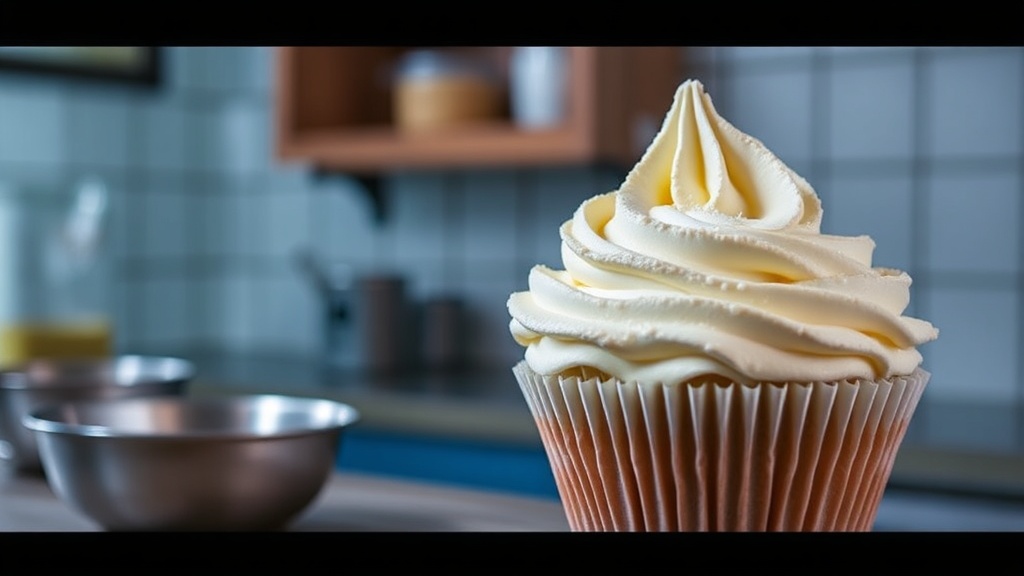
Why Your Butter Is Too Soft for Frosting

You will learn how to identify the ideal temperature for butter, how to fix broken frostings, and how to manipulate fat temperatures to achieve structural stability in your buttercream.
The difference between a professional, sharp-edged cake and a slumped, greasy mess often comes down to a single variable: the temperature of your fat. When you are working with buttercream—whether it is a classic American, a Swiss Meringue, or a French buttercream—the butter acts as the structural scaffolding. If that butter is too soft, your frosting will lose its ability to hold air bubbles and will eventually collapse under its own weight. This post covers the science of fat stability and the practical steps you can take to ensure your frosting stays stiff and pipeable.
The Science of Butter Temperature and Emulsion
Butter is a complex emulsion of water, milk solids, and fat. In a perfect buttercream, these components are suspended within a structure of air bubbles created during the creaming process. When your butter is too soft, you are essentially moving past the "creaming" stage and into the "melting" stage. Once the fat begins to liquefy, the air bubbles you worked so hard to incorporate pop and escape, leaving you with a heavy, greasy substance rather than a light, fluffy frosting.
For a standard American buttercream, you are looking for a temperature between 18°C and 20°C (65°F to 68°F). At this temperature, the butter is plastic—meaning it can be molded and holds its shape—but it is still solid enough to support the weight of the sugar. If you reach 24°C (75°F) or higher, the butter enters a state where it becomes too fluid to hold the mechanical aeration required for a stable whip.
Identifying the Symptoms of Over-Softened Butter
Before you even pick up a spatula, you can often tell if your butter is too warm by observing its physical behavior. Watch for these specific red flags during your mixing process:
- Loss of Volume: If you have been creaming your butter and sugar for five minutes and the volume in the bowl is decreasing rather than increasing, your butter is too soft.
- Glossy or Shiny Texture: A healthy buttercream should have a matte or satin finish. If the mixture looks shiny or translucent, the fat is beginning to melt.
- Separation: If you see small beads of liquid oil separating from the sugar/butter mixture, the emulsion has broken. This is a sign that the heat from your hands or the room is too high.
- Lack of "Peaks": When you lift the paddle attachment, the frosting should hold a soft or stiff peak. If it drips off like heavy cream, the fat structure has collapsed.
Common Culprits: Why Your Butter Is Too Warm
In a professional kitchen, we control the environment strictly. At home, several variables can sabotage your temperature control without you realizing it.
The "Room Temperature" Myth
Many recipes call for "room temperature butter," but "room temperature" is a subjective term. In a humid Montréal summer, your kitchen might be 26°C (78°F), while in a heated apartment in January, it might be 22°C (72°F). If your recipe assumes a standard 20°C but your kitchen is significantly warmer, your butter will hit the melting point long before you finish incorporating your liquids.
The Friction of the Mixer
High-speed mixing generates heat. If you are using a stand mixer like a KitchenAid Artisan on a high speed for an extended period, the mechanical energy from the motor is being converted into heat within the bowl. This friction can raise the temperature of the butter by several degrees, turning a stable emulsion into a runny mess. To prevent this, use medium speeds and take breaks to let the bowl cool.
The Temperature of Your Liquids
If you are making a Swiss Meringue Buttercream, you are adding room-temperature butter to a warm meringue. If your meringue is still slightly above 35°C (95°F) when you begin adding the butter, the butter will melt instantly upon contact. This results in a soup-like consistency that is incredibly difficult to fix without starting over.
How to Fix Broken or Too-Soft Frosting
If you realize your frosting is too soft, do not panic. You do not necessarily need to throw it away. Depending on the type of frosting, there are different recovery methods.
The Refrigeration Method (For American Buttercream)
For basic American buttercream (butter, powdered sugar, vanilla), the fix is usually cold. Transfer the frosting to a large bowl and place it in the refrigerator for 15–20 minutes. Do not let it freeze; you want it to chill, not solidify. After chilling, take it out and beat it on medium speed. The cold will help the fat crystals reform and regain structure. If it is still too soft, repeat the process in 10-minute increments.
The "Heat and Re-Emulsify" Method (For Swiss Meringue)
Swiss Meringue Buttercream (SMBC) is more temperamental. If it looks curdled or "broken" because the butter was too cold, you actually need to add heat. If it is too soft because the butter was too warm, you must use the cold method. If your SMBC is currently a liquid soup, it is because the butter was too warm. Chill the entire bowl in the fridge for 20 minutes, then use the hand mixer to beat it. If it stays curdled even after chilling, you may need to use a double boiler to gently melt the mixture slightly and then re-whip it as it cools.
Pro Tips for Temperature Stability
To avoid these issues entirely, implement these professional habits into your baking routine:
- The Finger Test: Before you start mixing, press your finger into the block of butter. It should leave an indentation like modeling clay, but the finger should not sink in easily, and there should be no visible oil on your skin. If it feels greasy, it is too soft.
- Chill Your Tools: If you are working in a warm kitchen, place your mixing bowl and paddle attachment in the refrigerator for 10 minutes before you begin. This provides a thermal buffer against the heat of the mixer.
- Use High-Quality Butter: Brands like Kerrygold or Plugra have higher fat content and slightly different melting points than generic supermarket brands. While more expensive, the stability of high-fat European-style butter can make a significant difference in the structural integrity of your frosting.
- Incremental Liquid Addition: When adding milk, heavy cream, or fruit purees to your frosting, add them one tablespoon at a time. This allows the emulsion to stabilize at every step, preventing the temperature from spiking.
Understanding the relationship between fat and temperature is a fundamental skill. Once you master the ability to read the texture of your butter, you will have much more control over your final cake design. If you are interested in how other ingredients affect texture, you might find the science behind perfect chocolate chip cookies helpful for understanding ingredient ratios and heat.
Baking is a visual medium, but the beauty of a cake is built on a foundation of chemistry. Treat your butter with the respect its temperature deserves, and your frosting will hold its shape every time.