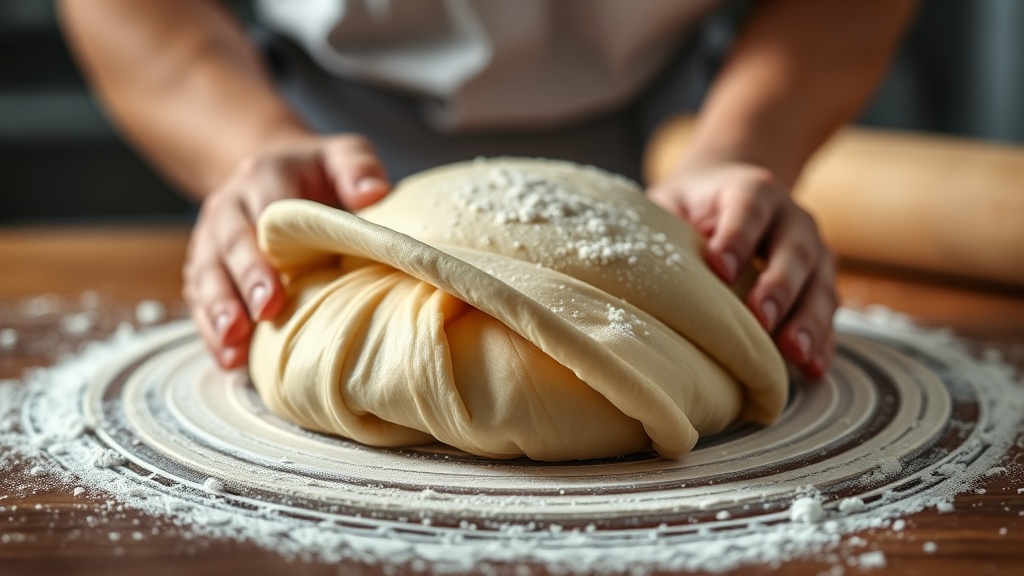
Achieving the Perfect Lamination with Folded Dough

Imagine pulling a tray of croissants from the oven, expecting to see those dramatic, shattered layers of gold, only to find a heavy, doughy lump that looks more like a dense roll. It's a heartbreak every baker knows. This post breaks down the mechanics of lamination, focusing on how to manage temperature, dough strength, and the actual folding process to ensure you get those distinct, flaky layers every single time.
Lamination is essentially a game of physics and temperature. You aren't just making dough; you're building a structural architecture of fat and flour. If your butter melts into the dough, you've lost the battle. If it stays too hard, the layers won't expand. It's a fine line to walk.
What is the Best Temperature for Laminated Dough?
The ideal temperature for laminated dough is between 55°F and 60°F (13°C to 15°C) to ensure the butter stays plastic and doesn't melt into the flour. You want the butter to be pliable—think of the consistency of cold way too much way too much room-temperature butter, but not quite soft. It needs to be "plastic," meaning it can bend without snapping and without oozing.
If your kitchen is a warm, humid summer day in Montréal, you're going to have a harder time. You might need to chill your flour or even your rolling pin. I've seen many bakers fail because they ignored the ambient temperature of their workspace. If the dough feels slightly tacky or "greasy," it's too warm. Stop. Put it back in the fridge.
A common mistake is using high-fat butter that is too soft. While high-fat butter (like Kerrygold or professional-grade Cépadès butter) provides incredible flavor, it also has a lower melting point. You have to be much more vigilant with temperature control when working with premium fats.
"The secret isn't just the quality of the butter, it's the patience to let the dough rest between every single fold."
When you're working with a dough that has been through multiple folds, the gluten becomes quite developed. If the dough feels tight or resists your rolling pin, it's a sign that the gluten is too strong. Let it rest. A long rest allows the gluten strands to relax, making the rolling process much smoother.
The Importance of Butter Plasticity
Plasticity is the state where the butter is neither solid nor liquid. If the butter is too cold, it will shatter into tiny pieces during the rolling process, creating "shards" rather than continuous layers. This leads to a flaky, uneven texture that lacks structure. On the flip side, if it's too warm, the butter absorbs into the dough, and you end up with a brioche-like texture instead of a laminated one. You've basically made a very expensive loaf of bread.
I often suggest using a lamination technique that involves a "butter block" or beurrage. This block must be the same consistency as your dough. If you're using a heavy-duty rolling pin, make sure it's heavy enough to compress the dough evenly without tearing the delicate layers.
How Do You Fold Dough for Perfect Layers?
You create layers by folding a sheet of dough over a sheet of fat, then rolling it out again, a process repeated through several "turns" to create hundreds of thin sheets. There are two primary methods: the single fold (book fold) and the double fold (letter fold). Each produces a different number of layers and a different final texture.
Here is a breakdown of the two most common folding methods:
| Fold Type | Description | Resulting Texture |
|---|---|---|
| Single Fold (Book Fold) | The dough is folded in half, then in half again like a book. | Produces larger, more distinct, and more dramatic layers. |
| Double Fold (Letter Fold) | The edges are folded toward the center, and then the dough is folded in half. | Produces more numerous, thinner, and more delicate layers. |
Most professional pastry chefs prefer the single fold for croissants because it creates that iconic, wide-open crumb structure. However, the double fold is excellent for puff pastry where you want a more uniform, tight crumb. If you find your layers are uneven, it's often because your rolling direction was inconsistent. Always roll from the center outward, and try to maintain a consistent thickness.
Don't forget that the way you fold affects the gluten development. Frequent folding builds strength, but too much folding without rest will lead to a tough product. If you see the dough starting to shrink or pull back while you're rolling, that's your cue to stop and chill the dough. If you keep pushing, you'll tear the layers. It's a bad sign.
If you're noticing that your dough is becoming too difficult to handle, you might also want to check your hydration levels. While lamination is mostly about the fat, a dough that is too dry will be impossible to roll out without cracking. If you're struggling with consistency, it might be worth looking at why your cake might be dense—the principles of hydration and structure are often linked in baking science.
Can You Use Regular Butter for Lamination?
You can use regular butter, but it is significantly more difficult than using professional-grade, high-fat European-style butter. Standard grocery store butter often has a higher water content, which leads to steam-induced holes and a more fragile structure during the baking process.
High-fat butter (usually 82% fat or higher) is much more stable. The lower water content means there is less steam being released, which keeps the layers more defined and less prone to collapsing. If you use a standard butter, you'll need to be much more aggressive with your chilling times. You'll likely need to chill the dough for longer periods between folds to compensate for the lower melting point.
The catch? High-fat butter is more expensive and can be harder to find depending on your location. But for a baker, it's a worthy investment. It changes the way the dough behaves under the rolling pin. It's the difference between a hobbyist and a professional result.
Here's a quick checklist for your next lamination session:
- Check your butter fat content: Aim for 82% or higher.
- Temperature check: Is the butter "plastic" or is it a brick?
- Resting time: Did you give the dough at least 30 minutes in the fridge between folds?
- Rolling direction: Are you keeping your turns consistent?
If you're seeing a lot of "shattering" in your layers, your butter was too cold. If the layers are disappearing, your butter was too warm. It's a delicate balance of temperature and timing. One wrong move and you're just eating delicious, buttery bread instead of a flaky pastry. But that's the beauty of it—even a "failed" croissant is still a great snack.
When you're working with the dough, pay attention to how it feels under your hands. The dough should feel supple, not sticky. If it's sticking to your rolling pin or the work surface, you might need a tiny bit of flour, but be careful—too much flour will dry out the dough and ruin the lamination. A light dusting is plenty. If you find yourself using too much flour, you might want to review why your bread crust might be too tough, as excessive flour can lead to a heavy, unyielding texture.
Steps
- 1
Prepare Your Butter Block
- 2
The First Fold
- 3
Rest and Chill
- 4
The Final Turns