7 Reasons Your Bread Crust Is Too Hard or Tough

Baking Temperature Is Too High
Not Using Enough Steam in the Oven
Over-proofing Your Dough
The Bread Stayed in the Oven Too Long
Using Too Much Flour in the Dough
Incorrect Cooling Process
Too Much Whole Grain Content
Many home bakers believe that a thick, crunchy crust is a sign of a successful bake, but there is a significant difference between a crisp, shattering crust and one that is unpleasantly hard or tooth-breakingly tough. A perfect crust should offer a slight resistance before yielding to a soft, airy interior. If your loaves are coming out of the oven feeling like bricks or requiring excessive effort to slice, the issue usually stems from a specific variable in your fermentation, hydration, or baking environment. This guide breaks down the seven most common culprits behind tough bread crusts and provides technical solutions to fix them.
1. Insufficient Steam During the Initial Bake
The most frequent reason for a hard, thick crust is a lack of moisture in the oven during the first 15 to 20 minutes of baking. Steam is essential because it keeps the surface of the dough hydrated and flexible. When the surface remains moist, the gases produced by the yeast can expand the loaf fully (oven spring) before the crust sets. Without steam, the starches on the surface undergo rapid gelatinization and dry out almost immediately, creating a thick, rigid shell that prevents the bread from reaching its full volume.
To correct this, you must introduce a consistent source of steam. If you are baking in a standard home oven, use a Dutch oven. The lid traps the moisture evaporating from the dough itself, creating a self-contained steam chamber. If you prefer baking on a baking stone or steel, use a cast iron skillet placed at the bottom of the oven. When you slide your loaf onto the stone, pour a cup of boiling water into the hot skillet to create an immediate burst of steam. For even better results, use a heavy-duty commercial spray bottle to mist the oven walls, but be careful not to spray directly onto the heating elements.
2. Over-Baking the Loaf
Even if your technique is flawless, leaving bread in the oven too long will inevitably result in a tough crust. As baking progresses, the moisture within the crust evaporates. Once the internal moisture is gone, the crust hardens significantly. A loaf that looks a beautiful deep brown might actually be overdone if the temperature was too high or the duration too long.
Use a digital probe thermometer to take the temperature of the bread rather than relying solely on color. For most sourdough or yeast breads, the internal temperature should be between 190°F and 210°F (88°C to 99°C). If you notice your crust is becoming excessively dark or hard, lower your oven temperature by 25°F for the final ten minutes of the bake. This allows the bread to finish cooking through without the exterior becoming overly dehydrated. If you are working with a recipe that uses high amounts of sugar or honey, be particularly mindful, as these ingredients accelerate browning through the Maillard reaction and caramelization.
3. Low Hydration Levels in the Dough
The ratio of water to flour—known as hydration—directly dictates the texture of the final crust. Low-hydration doughs, such as those used for sandwich breads or bagels, naturally produce a denser, tougher exterior. While this is intentional for some styles, it can be a problem if you are aiming for a crusty artisan loaf. When the dough lacks sufficient water, the gluten network becomes tighter and less extensible, resulting in a crust that feels leathery rather than crisp.
If you want a more delicate, crispy crust, increase your hydration by 2% to 5%. For example, if you are using a standard 65% hydration recipe, try moving to 70% or 72%. However, be aware that higher hydration requires more advanced handling skills, as the dough will be stickier and more difficult to shape. If you find that increasing water makes your dough too difficult to manage, you might be experiencing issues similar to dense and crumbly textures in other baked goods, where the structural integrity is compromised by a lack of moisture or improper mixing.
4. Excessive Flour on the Surface
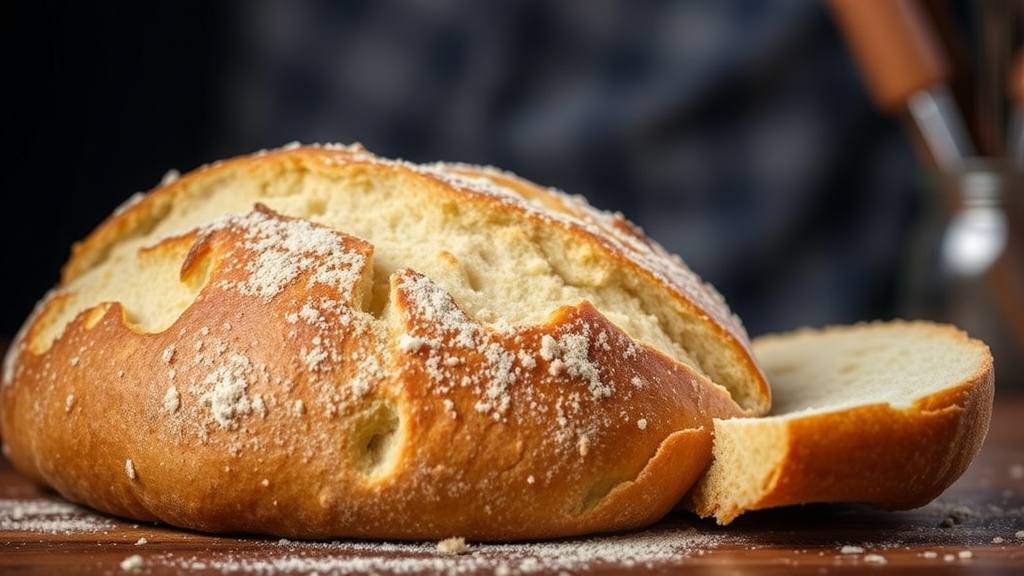
It is common practice to dust a proofing basket (banneton) with flour to prevent the dough from sticking. However, if you use too much flour—specifically high-protein bread flour or rye flour—that excess flour remains on the surface of the dough during the bake. This unabsorbed flour acts as a desiccant, absorbing moisture from the dough and creating a dry, gritty, and hard exterior layer.
To prevent this, use a fine-textured flour like rice flour for dusting your proofing baskets. Rice flour is non-absorbent and much less likely to stick to the dough or create a hard crust than traditional wheat flour. Alternatively, ensure you are lightly tapping the basket to remove excess flour before placing the dough inside. If you see a thick white coating on your loaf after it comes out of the oven, you have used too much dusting flour, which contributes to a tough, "dusty" mouthfeel.
5. Improper Cooling and Storage
A crust's texture does not stop evolving once it leaves the oven. The cooling process is a critical final stage of the baking cycle. If you slice into a loaf while it is still warm, the steam escaping from the center will immediately be absorbed by the crust, making it soft and gummy. Conversely, if you store bread in a plastic bag while it is still slightly warm, the trapped moisture will turn a crisp crust into a tough, leathery one.
Always cool your bread on a wire cooling rack to allow air to circulate around the entire loaf. This prevents the bottom from becoming soggy and ensures the crust remains crisp. Once the loaf is completely cold to the touch—which can take up to two hours for a large sourdough boule—store it in a paper bag or a bread box. Avoid airtight plastic containers if you want to maintain a crusty exterior, as plastic is highly effective at trapping moisture, which will eventually soften the crust into a tough, chewy texture.
6. High Protein Flour and Gluten Development
The type of flour you choose significantly impacts the toughness of the crust. Bread flour is specifically designed to have a high protein content (usually 12% to 14%) to facilitate strong gluten development. While this is necessary for a high-rising loaf, an over-developed gluten network combined with a long bake time can result in a crust that feels overly structural and hard. If your dough has been overworked during the kneading process, the gluten becomes extremely tight and resilient.
To achieve a more tender crust, you can blend a small percentage of all-purpose flour into your bread flour. This reduces the total protein content slightly, leading to a more extensible dough and a less aggressive crust. Additionally, monitor your mixing times. If you are using a stand mixer like a KitchenAid, avoid over-mixing the dough once the gluten has reached its peak development. Over-kneading can lead to a "rubbery" quality that extends from the crumb into the crust.
7. Incorrect Oven Temperature
The relationship between temperature and crust formation is a delicate balance. If your oven temperature is too low, the bread will bake slowly, allowing moisture to evaporate steadily over a long period. This results in a thick, hard, and unappealing crust because the "crust-setting" phase is drawn out. On the other hand, if the temperature is too high, the exterior will burn before the interior is fully cooked.
For an ideal artisan crust, you want a high initial temperature to trigger rapid steam expansion and crust formation. Many professional bakers preheat their ovens to 500°F (260°C) and then drop the temperature to 450°F (230°C) once the bread is loaded. This "high-to-low" method ensures the crust sets quickly and crisply without becoming excessively hard. If you are using a convection oven, be aware that the fan can actually dry out the crust more quickly. In these cases, you may need to increase the steam or slightly lower the fan speed to prevent the bread from becoming too tough.
Summary Checklist for a Perfect Crust
- Use a Dutch oven or a steam tray to maintain surface moisture.
- Check internal temperature with a digital thermometer to avoid over-baking.
- Increase hydration slightly if the crust feels too leathery.
- Use rice flour for dusting to prevent a gritty, hard surface.
- Cool on a wire rack and avoid plastic bags for immediate storage.
- Balance flour types if you prefer a less aggressive gluten structure.
- Start with high heat to ensure a rapid, crisp set.