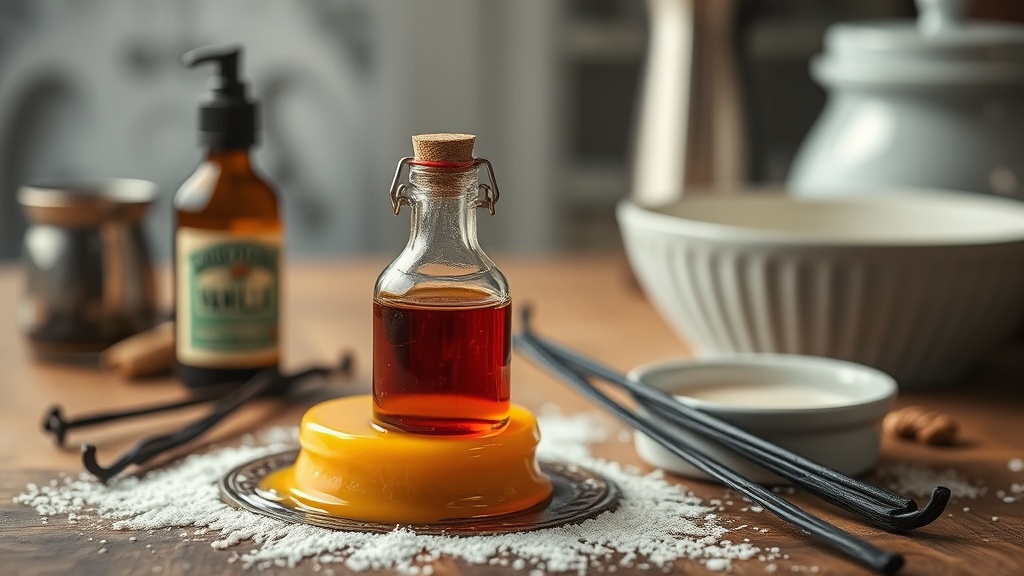
Why Your Vanilla Extract Might Be Ruining Your Custard

Most home bakers assume that any dark liquid in a bottle labeled "vanilla" will yield the same result in a crème anglaise or a pastry cream. They're wrong. If you've ever wondered why your expensive homemade custard tastes thin or lacks that deep, creamy complexity, the culprit likely isn't your technique or your oven temperature. It's the quality of your extract. Vanilla isn't just a flavoring agent; it's a structural component of the flavor profile in many high-end pastry recipes. When you use a cheap, synthetic imitation, you aren't just missing a scent—you're missing the fat-soluble compounds that bridge the gap between heavy cream and sugar.
I used to think a bottle of vanilla was just a bottle of vanilla. Coming from an art background, I looked at ingredients as colors on a palette. A cheap substitute is like using a neon-colored acrylic when the recipe calls for a subtle, nuanced watercolor wash. It breaks the harmony. We're going to look at the differences between vanillin-based extracts, pure extracts, and bean pastes, and how each one changes the way your bakes behave.
Is Vanilla Extract vs. Vanilla Bean Paste Actually Different?
The short answer? Yes, and the difference is visible. If you look closely at a professional-grade vanilla bean paste, you'll see tiny black specks. These aren't just for show—they are the actual seeds from the vanilla orchid. When you use a standard liquid extract, you're getting a filtered version of the flavor. It's a liquid suspension of flavor, whereas a paste is a concentrated, viscous medium.
When I'm working on a delicate vanilla bean mille-feuille, I need that texture. A liquid extract might dissipate too quickly into the heavy cream, leaving the custard looking pale and uninspired. A paste, however, holds its ground. It adds a subtle, grainy texture that signals to the palate that something real is happening. For more on the botanical differences, you can check out the detailed descriptions at the Britannica entry for Vanilla.
Think of it this way: liquid extract is a watercolor wash, while bean paste is a heavy impasto stroke. One is for subtle background notes; the other is for when you want the vanilla to be the star of the show. If you use a cheap imitation with a high concentration of vanillin, you'll often find a chemical aftertaste that lingers on the back of the tongue, ruining the silkiness of your cream.
Does the Type of Vanilla Affect the Texture of My Custard?
This is a nuance many people miss. Vanilla contains trace amounts of oils and resins that contribute to the mouthfeel of a dessert. A high-quality, pure vanilla extract contains more complex organic compounds than a synthetic version. While the vanilla won't change the physical viscosity of the custard (that's the job of your egg yolks and starch), it changes the perception of texture.
- Synthetic Vanillin: Tends to be "one-note." It hits the nose, then disappears, leaving a flat sensation.
- Pure Extract: Provides a rounded flavor that evolves as the custard cools.
- Vanilla Bean Paste: Adds a luxurious, slightly textured mouthfeel and deep, dark visual cues.
If you're making a simple pudding, a liquid extract is fine. But if you're aiming for a professional-grade diplomat cream, you need the depth that only real vanilla provides. It's about the way the flavor interacts with the fats in your dairy. High-quality extracts actually help the fats feel richer on the tongue.
Which Vanilla Should I Use for Different Baking Projects?
Choosing your medium depends entirely on your final goal. I often categorize my vanilla usage into three distinct tiers. This helps me stay organized when I'm prepping a large batch of pastry components.
- The Everyday Tier: This is for your standard sponge cakes or muffins where the vanilla is a supporting actor. A decent, mid-range pure extract works beautifully here. It's reliable and doesn't break the bank.
- The Texture Tier: This is for when you want visual and textural interest. Think vanilla bean panna cotta or even a thick pastry cream for eclairs. This is where vanilla bean paste shines. The specks are beautiful and add a sense of craftsmanship.
- The Luxury Tier: This is reserved for the high-end stuff—pure vanilla bean powder or even whole beans soaked in spirits. Use this for when the recipe is essentially a "Vanilla" dessert. If there's no other flavor to distract from it, the vanilla must be perfect.
I often reference the Food Network guides when I need to double-check the specific heat-stability of different extracts. Some flavor profiles can volatilize (disappear) quickly in high-heat environments like a tart shell, so choosing the right one is a matter of timing and temperature.
When you're standing in the baking aisle, don't just grab the first bottle you see. Look at the label. If it says "vanilla flavor" instead of "vanilla extract," you're looking at a synthetic product. It might work in a pinch, but it won't give you that deep, resonant finish that makes people wonder why your desserts taste so much better than theirs. It's a small detail, but in the world of pastry, the details are everything.
A Quick Comparison Guide for Vanilla Types
| Type | Primary Use | Visual Impact | Flavor Profile |
|---|---|---|---|
| Pure Extract | Cakes, Cookies, General Baking | Clear/Light Amber | Smooth, balanced, subtle |
| Vanilla Paste | Custards, Panna Cotta, Creams | Speckled, thick | Rich, textured, deep |
| Vanilla Powder | Frostings, Buttercreams | Fine powder | Intense, concentrated |