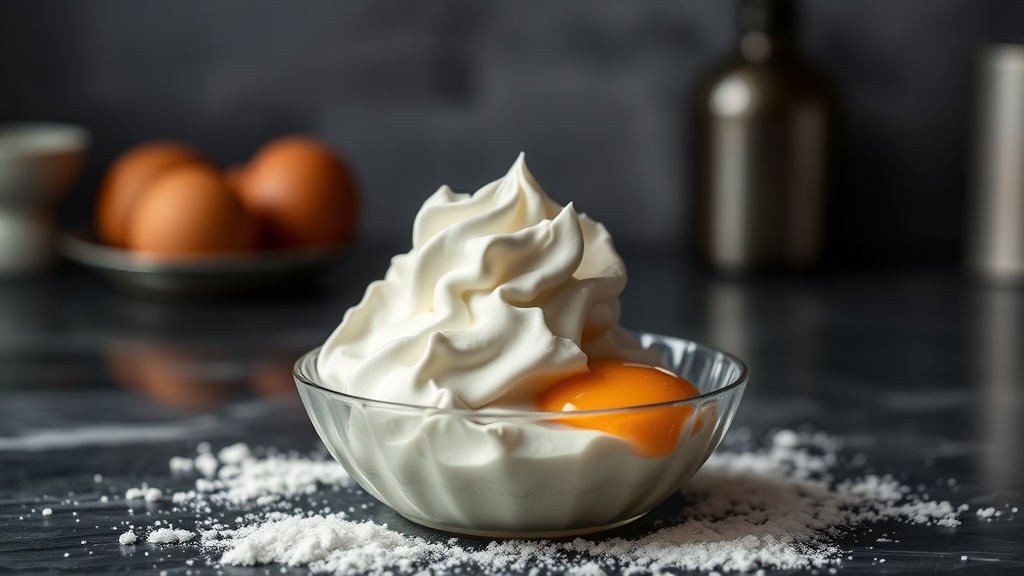
Why Your Egg Whites Won't Peak

Quick Tip
Ensure your bowl and whisk are completely free of any oil or egg yolk before starting.
Why Your Egg Whites Won't Peak
Have you ever whisked your egg whites for ten minutes only to find they remain a liquid puddle instead of a stiff, glossy foam? Achieving stable meringue is essential for everything from pavlovas to light sponge cakes, but a single mistake in your preparation can prevent the protein structure from ever forming. This guide covers the most common culprits behind failed egg whites and how to fix them.
The Presence of Fat and Yolks
The most frequent reason for failed meringue is the presence of even a microscopic amount of fat. Egg yolks are pure fat, and if a tiny bit of yolk breaks into your whites, the protein strands cannot bond to trap air. Even a trace of oil from a poorly washed bowl or a residue from a silicone spatula will cause the process to fail.
- Use a Glass or Metal Bowl: Plastic bowls often retain a thin film of oil even after washing. I recommend using a stainless steel or glass bowl to ensure it is completely fat-free.
- The Lemon Juice Trick: A few drops of fresh lemon juice or a pinch of Cream of Tartar acts as a stabilizer. The acid helps the proteins bond more effectively, making the foam more resistant to collapsing.
Temperature and Timing
Temperature plays a significant role in how quickly and effectively egg whites aerate. While cold eggs are easier to separate, room-temperature eggs are much better for whipping.
When egg whites are at room temperature, the proteins are more relaxed, allowing them to stretch and trap air bubbles more easily. If you are in a rush, you can place your separated whites in a bowl of warm water for five to ten minutes before you begin whisking. This temperature adjustment is particularly helpful when you are working on delicate recipes like making perfect macarons, where stability is key.
Sugar Integration
Adding sugar too early or too quickly can weigh down the protein structure before it has a chance to stabilize. If you dump all your granulated sugar into the whites at the beginning, the weight of the crystals will prevent the air from expanding.
- Start with Soft Peaks: Begin whisking your whites until they reach "soft peaks"—the stage where the foam holds its shape but the tip flops over when you lift the whisk.
- Add Sugar Gradually: Once you reach soft peaks, add your sugar one tablespoon at a time. This allows the sugar to dissolve into the moisture of the whites without collapsing the air bubbles you have already worked hard to create.
Pro Tip: To test if your whites are truly ready, lift your whisk out of the bowl. If the tip stands straight up without drooping, you have reached "stiff peaks" and are ready to fold them into your batter or bake them.