Why Your Butter Temperature Changes Everything

The Hidden Impact of Fat Temperature on Pastry Structure
A single degree of temperature change in your butter can be the difference between a flaky, shattered crust and a heavy, dense lump of dough. While many bakers focus on time or flour weight, the thermal state of your fats dictates how a pastry actually behaves during the bake. If your butter is too soft, it emulsifies into the flour; if it is too cold, it refuses to create the distinct layers required for true lamination. Understanding this thermal relationship isn't just about following a recipe—it's about controlling the physical architecture of your bake.
In the world of professional pastry, we don't just look at ingredients as items on a list; we look at them as variables in a chemical reaction. When you work with high-fat doughs like puff pastry or Danish, you aren't just mixing dough. You're creating a mechanical system where layers of fat and dough alternate. If that fat melts prematurely due to the heat from your hands or a warm kitchen, those layers vanish, and you end up with a greasy, flat product instead of a light, airy masterpiece.
Is Cold Butter Better for Flaky Crusts?
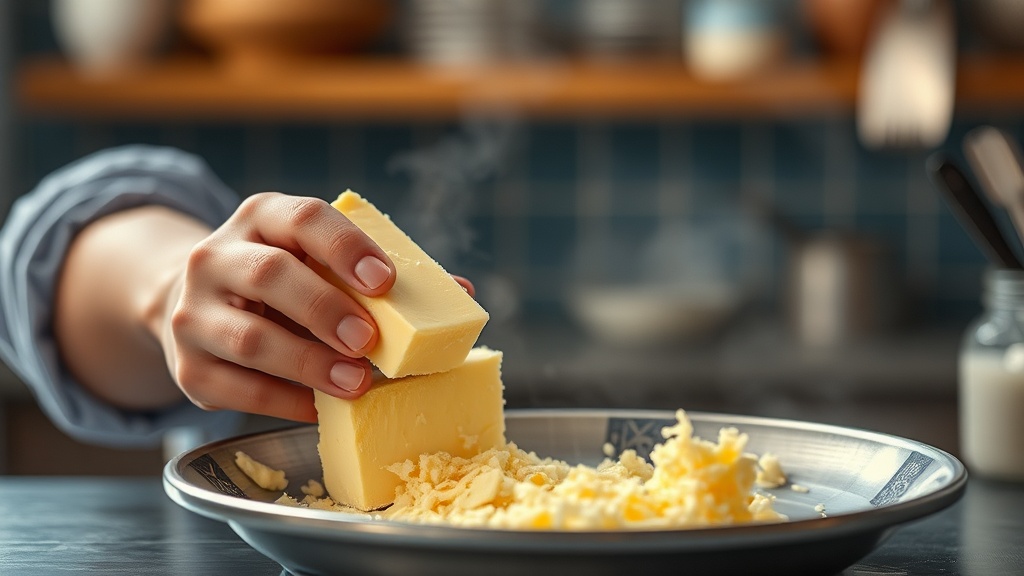
The short answer is yes, but there's a nuance to it. When we talk about "cold" butter in a pastry context, we aren't talking about frozen blocks. We're talking about butter that is firm enough to hold its shape under pressure. During the folding process, you want small, distinct chunks of fat to remain intact. As the pastry hits the hot oven, that water in the butter evaporates, creating steam. This steam pushes the dough layers apart, creating the "lift" we all crave. If the butter has already softened into the flour before it hits the oven, the steam has nowhere to go, and your lift disappears.
To achieve this, many professional kitchens keep their workspace temperature strictly controlled. If you're working in a warm kitchen, you might need to chill your flour or even your rolling pin. A common mistake is using room-temperature butter for a pie crust. While that might work for a soft cookie, it's a disaster for a flaky crust. You want the fat to be at a state where it can be sliced into clean, distinct pieces—not a paste. For more technical details on how fats behave in dough, the King Arthur Baking resources offer incredible deep dives into ingredient behavior.
How Do I Know If My Dough Is Too Warm?
You'll know your dough is too warm if the texture starts feeling "greasy" or if it becomes difficult to roll out without tearing. If you see a dull sheen on the surface of your dough, that's a sign the fat is beginning to melt into the flour. At this point, the lamination is compromised. If this happens, don't try to force it. Stop everything, wrap the dough in parchment, and put it in the fridge for at least thirty minutes. You can't undo the melting, but you can try to re-solidify the fat before the next stage of folding.
I've seen so many talented bakers struggle because they ignored the ambient temperature of their kitchen. It's not just the oven; it's the air around you. A professional-grade stand mixer might generate heat through friction, which can inadvertently warm your dough during the mixing stage. Always keep an eye on the dough's physical state. If it feels tacky or loses its structure, it's time for a cold rest. A little patience goes a long way in preventing a total structural failure.
Can I Use Room Temperature Butter for Cookies?
Absolutely, and in that context, it's actually preferred. Unlike puff pastry where we want distinct layers, cookies rely on the creamed-together method. In this scenario, we want the butter and sugar to create a stable, aerated emulsion. This creates a much softer, more uniform crumb. The science of the "creaming method" is quite different from lamination. In cookies, the butter acts as a vehicle for air, whereas in pastry, it acts as a physical barrier. You can read more about the fundamental chemistry of baking through the science of food principles found in various culinary textbooks.
When you're making a cookie, you're looking for a specific consistency. The butter should be pliable but not oily. If you use butter that is too cold, your cookies won't spread, and you'll end up with thick, heavy mounds. If it's too warm, they will spread into a thin, greasy puddle. It's a delicate balance of temperature and aeration. Think of the butter as your structural foundation—whether you're building a skyscraper of layers or a soft, pillowy cookie, the temperature is your most important tool.
| Desired Result | Butter State | Why It Works |
|---|---|---|
| Flaky Pie Crust | Very Cold/Firm | Creates steam-driven layers. |
| Puff Pastry | Cold/Distinct Chunks | Maintains structural separation. |
| Soft Cookies | Room Temp/Creamed | Creates air pockets for lift. |
| Shortbread | Soft/Pliable | Ensures even distribution of fat. |
Ultimately, baking is a visual and tactile medium. You're not just following a list of instructions; you're reacting to the materials in front of you. The butter is a living variable. It responds to the humidity in your room, the heat of your hands, and the friction of your rolling pin. Treat it with respect, and it will reward you with the textures you're aiming for. If you treat it like a static ingredient, you'll always be fighting against the physics of your own kitchen.