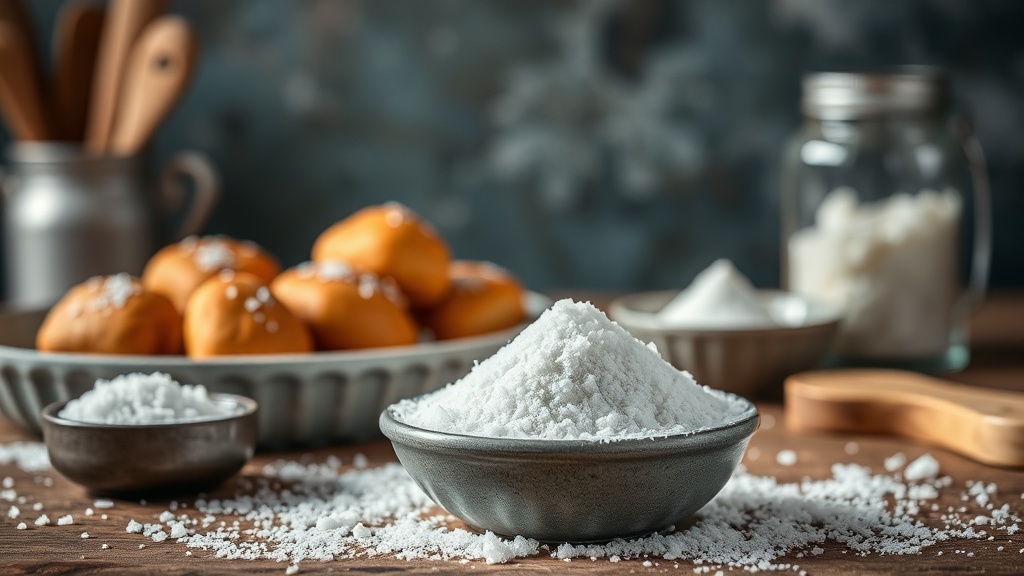
Why Your Baking Needs More Salt and Less Guesswork

You'll learn how salt acts as a silent conductor in your kitchen, regulating yeast fermentation and reinforcing the physical structure of every loaf you bake. Most home bakers treat salt as a minor seasoning—a literal pinch of after-thought—but it's actually the difference between a dough that holds its shape and one that collapses into a sticky mess. We're going to examine the chemistry of sodium chloride, the specific ways it interacts with proteins, and why your choice of brand might be ruining your favorite recipes.
How does salt affect the way my bread dough rises?
When you're working with yeast, salt isn't just there for flavor; it's a regulator. Yeast is a living organism that eats sugar and breathes out carbon dioxide. Without salt to slow it down, yeast goes into a feeding frenzy. This might sound like a good thing if you're in a hurry, but rapid fermentation leads to large, uneven air pockets and a weak internal structure. Salt exerts osmotic pressure on yeast cells, which essentially keeps their activity in check. It's the brakes on your fermentation car. If you forget the salt in a baguette dough, you'll notice the dough rises far too quickly and smells unpleasantly like alcohol (a byproduct of over-active yeast).
Beyond speed, salt impacts the flavor profile of the fermentation itself. A slower rise allows for the development of organic acids, which give bread its complex, wheaty character. In my Montréal kitchen, where the humidity can swing wildly, I've seen how salt helps stabilize the dough against these environmental shifts. Salt is hygroscopic, meaning it attracts water. In the context of a dough, this helps manage the hydration levels of your flour. For a deep dive into the biological mechanics of yeast, you can look at the resources provided by