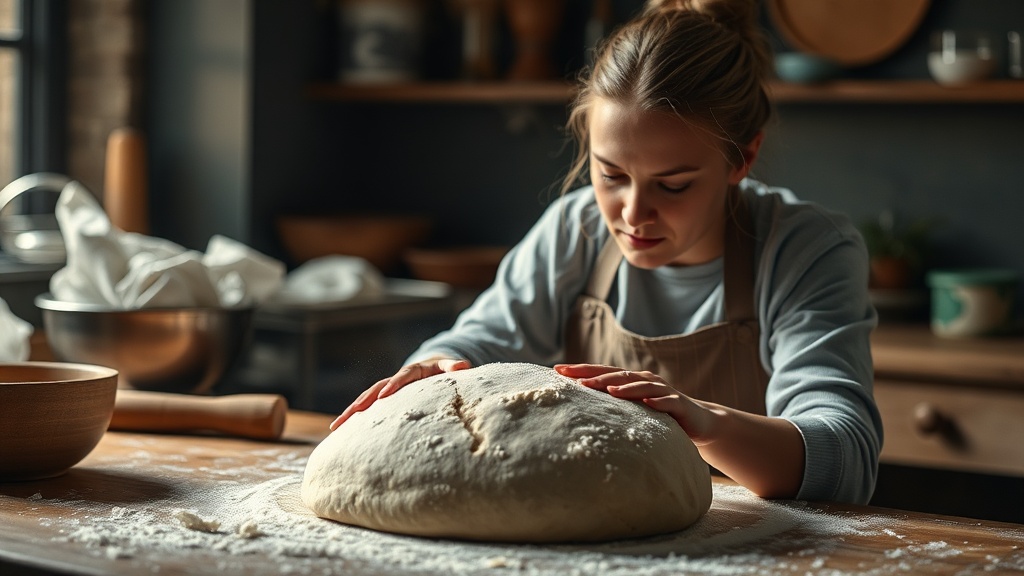
Why Resting Your Dough Beats Kneading It Into Submission

Why do we knead dough, really?
Most home bakers believe that more kneading equals better bread—that gluten development only happens through aggressive manipulation. We've all seen those videos of bakers pounding dough against marble slabs, working it until it's smooth as silk. But here's what they don't tell you: that approach works against the flour, not with it. Gluten forms naturally when flour meets water. The proteins gliadin and glutenin begin bonding the moment hydration occurs, creating an elastic network without any physical intervention. What kneading actually does is speed up this process and align the gluten strands into an organized structure. It's convenient, sure—but it's not the only way, and sometimes it's not even the best way.
The real magic happens during rest. When dough sits undisturbed, enzymatic activity breaks down starches into simpler sugars, feeding the yeast and developing complex flavors. The gluten relaxes, becoming more extensible and easier to shape without tearing. This isn't just theory—it's observable biochemistry. A dough that's been autolysed (rested before salt addition) or cold-fermented overnight handles differently, bakes differently, and tastes different than one that's been aggressively kneaded and rushed to the oven.
How long should you rest bread dough?
The answer depends on what you're making, but the principle remains consistent: longer rests yield better results. For a simple lean dough—flour, water, salt, yeast—a minimum thirty-minute autolyse (mixing flour and water before adding other ingredients) relaxes the gluten and allows for easier incorporation of salt and yeast afterward. This brief pause reduces your overall kneading time by half while improving the final texture.
For enriched doughs containing butter, eggs, or sugar, cold fermentation overnight in the refrigerator transforms the final product. The cold temperature slows yeast activity while bacterial fermentation continues, producing organic acids that strengthen gluten and create depth of flavor impossible to achieve in a same-day bake. Brioche that rests for twelve to twenty-four hours develops a complexity that tastes like it came from a professional pâtisserie—because that's exactly how professionals make it.
Sourdough bakers have known this for centuries. The long fermentation periods that characterize artisan sourdough aren't just about rising—they're about flavor development and gluten maturation. A sourdough that ferments for six to eight hours at room temperature, or twenty-four to seventy-two hours in the refrigerator, requires minimal handling. The dough practically shapes itself, and the oven spring is often superior to aggressively kneaded counterparts because the gluten structure remains relaxed and extensible.
What's actually happening during dough rest?
When dough rests, several processes occur simultaneously. Starch granules absorb water fully, hydrating the crumb structure. Protease enzymes gradually break down some gluten proteins, making the dough more extensible without weakening it. This is the key insight many bakers miss: gluten can be too strong. An over-kneaded dough becomes tight, resistant to shaping, and prone to tearing. It rises poorly because the elastic network fights against the gas bubbles trying to expand it.
Meanwhile, amylase enzymes convert starch to maltose, feeding yeast and creating fermentation byproducts that contribute to browning and flavor. This enzymatic activity doesn't happen during kneading—it requires time and moisture. A rested dough contains more available sugars, which caramelize beautifully in the oven, creating that mahogany crust we associate with bakery bread.
The hydration process itself deserves attention. Initially, flour and water appear combined, but on a microscopic level, water hasn't penetrated every starch granule. Resting allows capillary action to draw moisture throughout the dough, ensuring even hydration without continued mixing. This is particularly important for high-hydration doughs (above 75% water), where thorough incorporation through kneading alone is nearly impossible without overheating the dough.
Practical techniques for incorporating rest periods
The stretch-and-fold method exemplifies minimal manipulation. Instead of kneading for ten minutes straight, you perform four sets of gentle stretches and folds over the course of an hour. Each fold builds structure without exhausting the dough. By the final fold, the dough feels cohesive and elastic—but not tight. It's ready for bulk fermentation, during which you do absolutely nothing.
For busy home bakers, the no-knead method popularized by Jim Lahey revolutionized bread making. A wet dough mixed briefly, left alone for twelve to eighteen hours, and baked in a covered pot produces crusty, open-crumbed bread that rivals professional loaves. The long rest does the work that traditional kneading attempts to accomplish quickly—but it does it better, with more flavor and a more interesting crumb structure.
Even pastries benefit from strategic resting. Pâte brisée (tart dough) becomes less prone to shrinkage when rested before rolling. The gluten relaxes, preventing the dough from snapping back when transferred to a tart ring. Croissant dough requires multiple rest periods between folds to prevent butter from breaking through and to allow gluten relaxation between laminations. Without these pauses, the dough becomes difficult to roll and the final layers suffer.
Can you rest dough too long?
Yes, though the window is wider than most assume. Over-resting occurs when enzymatic activity breaks down too much gluten, or when fermentation produces too much acid, weakening structure. For yeasted doughs at room temperature, four hours is generally the maximum before overproofing becomes a risk. In the refrigerator, that window extends to seventy-two hours for most doughs, though sourdough can go longer depending on starter activity and temperature.
Signs of over-resting include dough that feels slack and unresponsive, a strong sour or alcoholic smell, and surface bubbling that doesn't spring back when poked. However, these issues typically only arise with extreme timelines. Most home bakers err on the side of too little rest, not too much. If your dough springs back aggressively when poked or shaped, it needs more time—not more kneading.
Enriched doughs with high fat content can rest longer than lean doughs because fat coats gluten strands, protecting them from enzymatic breakdown. This is why brioche and panettone recipes often specify overnight or even multi-day cold ferments without ill effect. The fat acts as a preservative for the gluten structure while flavor develops.
"The best bread I ever made was the one I almost threw out because I forgot about it in the refrigerator for two days. The crust was crackling, the crumb was open and custardy, and the flavor was nutty and complex. That accident taught me everything about patience." — Professional baker observation
Understanding the role of rest in dough development changes how you approach baking. It shifts focus from physical manipulation to time management, from working harder to planning better. The results speak for themselves: bread with deeper flavor, more interesting texture, and a crust that actually crackles when you bite into it. The next time you reach for dough to knead it, consider walking away instead. The dough will do the work for you—more effectively than your hands ever could.
For further reading on the science behind dough fermentation, King Arthur Baking offers excellent resources on enzymatic activity in bread dough. The Breadtopia community provides extensive documentation on no-knead methods and cold fermentation techniques. Serious bakers should also explore Serious Eats' bread science articles for deeper technical understanding of gluten development and hydration.