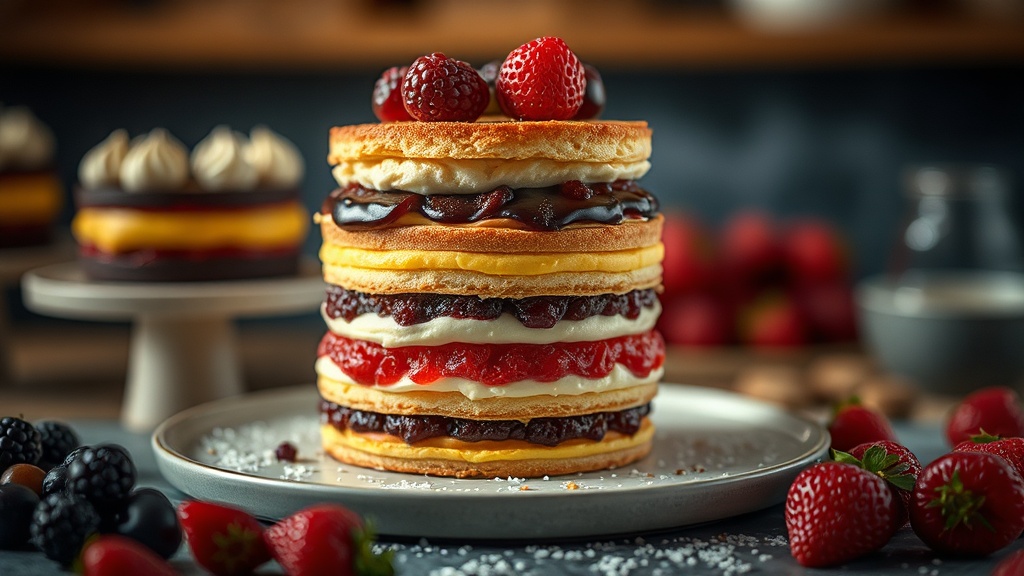
Why Do My Pastries Have So Many Layers?

Understanding the Physics of Lamination
In this guide, you'll learn exactly how heat, moisture, and mechanical force work together to create the distinct, flaky layers found in high-quality pastry. We'll look at the relationship between fat and dough, how temperature control affects your final result, and how to troubleshoot common issues like leaking butter or heavy dough.
Lamination isn't just about folding butter into dough; it's about creating a delicate, alternating structure of solid fat and elastic flour. When that pastry hits the heat of a hot oven, the water in the butter turns to steam. This steam pushes the layers of dough upward, creating that beautiful, open crumb we all crave. If your layers are messy or heavy, something in that delicate balance went wrong.
Think of the dough as a canvas and the butter as the medium that provides structure. If the butter melts too soon, you lose the layers. If it's too cold, it breaks the dough. It's a tightrope walk of physics and chemistry. You need enough tension in the dough to hold the shape, but enough softness in the fat to ensure it can expand without tearing the structure apart.
Why Does My Butter Leak Out of the Dough?
This is one of the most frustrating experiences in a home kitchen. You pull out a tray of croissants and instead of golden, airy crescents, you see a puddle of grease on your baking sheet. Usually, this happens because the temperature of your ingredients wasn't synchronized. If your butter is significantly warmer than your dough, it will melt into the flour rather than sitting in distinct sheets.
To prevent this, you need to maintain a consistent temperature throughout the entire process. Most professionals suggest working with butter that has a high melting point, like European-style butter with at least 82% fat content. This higher fat concentration means less water and more stability. You can read more about the chemical properties of high-fat butter through resources like the King Arthur Baking archives to understand why fat content matters so much.
If you see butter leaking, check two things: your oven temperature and your dough temperature. If your oven is too cool, the steam won't be strong enough to lift the dough before the butter melts, leading to a greasy, heavy pastry. If your dough is too warm during the folding process, the butter will incorporate into the flour, turning your laminated dough into a standard enriched bread dough. It's a common mistake, but one that's easily fixed by adjusting your workflow.
How Long Should I Rest My Dough Between Folds?
Resting is not a suggestion; it's a requirement. Every time you fold the dough, you're creating tension in the gluten. If you don't let that tension relax, the dough will fight back, shrinking and pulling unevenly. This is why a rest period in the refrigerator is vital between every single turn. This rest period does two things: it relaxes the gluten and chills the fat.
A standard rule of thumb is to rest the dough for at least 30 to 60 minutes between turns. However, if you're working in a warm kitchen, you might need longer. I always suggest checking the dough's temperature with a digital thermometer. If the dough feels slightly cool to the touch, it's ready for the next step. If it feels soft or tacky, put it back in the fridge. A little patience here makes the difference between a professional-grade croissant and a dense, flat roll.
Can I Use Regular Butter for Lamination?
You can, but you'll notice a significant difference in the final texture. Standard grocery store butter often has a higher water content, which can lead to a more "bready" texture and less distinct layers. For the best results, look for butter that is specifically labeled as high-fat or European-style. This provides a more stable "sheet" of fat that can withstand the folding process without breaking into small, uneven chunks.
The way the fat interacts with the flour is what determines the final crumb. When the fat is stable, it creates a physical barrier between the layers of dough. This is a concept deeply explored in professional pastry training. For a deep dive into the science of pastry-making components, the Exploratorium Science of Cooking offers incredible insights into how ingredients behave under heat.
The Importance of Temperature Control
Temperature is your most important tool, even more than your rolling pin. You're managing three distinct temperatures: the room temperature, the dough temperature, and the butter temperature. If these are out of sync, the lamination fails. A common mistake is trying to rush the process by skipping a rest period. This is an invitation for disaster.
Keep a watchful eye on your workspace. If your kitchen is a hot summer day in Montréal, you might need to move your dough to the freezer for 10 minutes before folding. This isn't about making it ice-cold; it's about ensuring the butter stays in a plastic, pliable state rather than a liquid state. A plastic state means the butter can bend without snapping, which is the key to those long, elegant layers.
| Issue | Likely Cause | The Fix |
|---|---|---|
| Heavy, dense layers | Too much gluten tension | Longer resting periods |
| Greasy bottom | Oven too cool or butter too warm | Increase oven temp; chill dough |
| Broken layers | Butter was too cold/hard | Soften dough slightly before folding |
| Small, uneven layers | Inconsistent folding technique | Use a consistent number of turns |
When you're working with these layers, you're essentially building a structural masterpiece. Each fold is a deliberate choice. If you fold too aggressively, you'll destroy the layers you've worked so hard to create. Be gentle, be precise, and always respect the temperature.