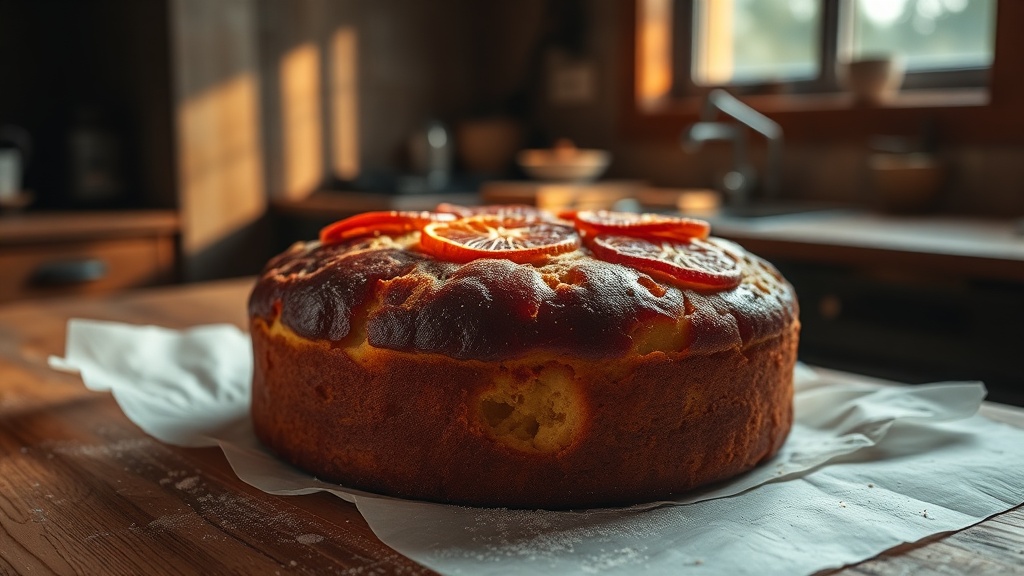
Saffron & Blood Orange Olive Oil Cake - Weekend Project

Picture this: it’s early March in Montréal, the sidewalks are slush, the sky is one flat shade of grey, and your kitchen window is giving exactly zero drama. This is the part of winter where I start needing color therapy in dessert form.
Here’s what I’m thinking: a saffron and blood orange olive oil cake that looks like sunlight landed on your counter. The crumb is deeply golden, the citrus slices go ruby and stained-glass at the edges, and the whole thing tastes bright, earthy, and just floral enough to feel a little luxurious without becoming precious.
I spotted the last gorgeous blood oranges in the Jean-Talon bins this week, and it felt like a now-or-never moment. If you’re planning your next two bakes after this one, I’d pair it with my winter citrus baking ideas and then roll into the weekend baking projects archive.
Why bake a saffron blood orange olive oil cake in March?
Because March is a bridge season, and this cake gives you peak color and flavor before spring produce arrives.
We’re over winter, but rhubarb and berries are not really here yet. Blood oranges still are. Olive oil cake is also exactly what this moment needs: one bowl, no mixer, low drama, high visual payoff.
And yes, saffron is the move here, not as a tiny background note but as the flavor and color anchor. Its earthy, honeyed, slightly floral edge grounds blood orange’s acidity and berry-like bitterness. You get contrast and harmony at the same time. C’est magnifique.
What makes olive oil cake different from butter cake?
Olive oil cake stays plush longer and carries citrus beautifully, while butter cake is usually richer but less bright.
A good extra-virgin olive oil gives you fruitiness, softness, and a little peppery depth depending on the bottle. In this recipe, that texture and flavor make the saffron and blood orange feel integrated instead of sharp. If you already loved the citrus profile in my blood orange and pistachio financiers, this is that mood in cake form.
How do you bloom saffron for baking?
Warm the saffron threads in a small splash of milk for about 10 minutes before adding them to the batter.
Don’t toss dry saffron straight into the bowl and hope for magic. Blooming coaxes out both color and aroma and spreads them evenly through the crumb. The technique takes almost no extra effort and it’s the difference between “nice” and “stunning.”
What’s the ingredient reality in early March?
Blood oranges are still in season, and saffron is still a splurge worth stretching.
The citrus timing is real: seasonal produce guides still show U.S. blood oranges running through winter into spring, with California peaking around January to March and Texas often December to April. And saffron? As of early March 2026, online spice listings are generally landing around US$14 to US$24 per gram depending on origin and grade. So yes, it costs more than your average spice jar, but this recipe uses a small amount and the visual payoff is wild. If you want another project that makes your saffron stash feel intentional, follow this with the cardamom pear galette weekend project.
How can you customize this olive oil cake?
Keep the olive oil-saffron base, then swap citrus or finishings to match your mood.
- Use a fruity olive oil, not a super aggressive peppery one. You want character, not harshness.
- Slice blood oranges thinly (2 to 3 mm). Thick slices can make the top heavy and pith-bitter.
- Zest first, then slice. Always. Mon dieu, I’ve forgotten this before and regretted it immediately.
- Want softer citrus bitterness? Blanch the slices for 1 minute in simmering water, then pat dry.
- No blood oranges left at your market? Use Cara Cara oranges and finish with crushed pistachio for contrast.
How do you make this saffron blood orange olive oil cake?
You build a citrus base in the pan, whisk a one-bowl saffron olive oil batter, then bake and invert.
Saffron & Blood Orange Olive Oil Cake
Makes one 9-inch (23 cm) cake, about 8 to 10 slices
Prep time: 25 minutes
Bake time: 40 to 50 minutes
Ingredients
For the saffron milk:
- 2 tablespoons whole milk, warmed
- 1/2 teaspoon saffron threads, lightly crushed between fingers
For the pan and citrus top:
- 2 medium blood oranges
- 2 tablespoons granulated sugar
- 1 tablespoon extra-virgin olive oil
- 1 teaspoon finely grated blood orange zest
For the cake batter:
- 1 3/4 cups (220g) all-purpose flour
- 1 1/2 teaspoons baking powder
- 1/2 teaspoon fine sea salt
- 3 large eggs, room temperature
- 3/4 cup (150g) granulated sugar
- 1/4 cup (60g) honey
- 3/4 cup (180ml) extra-virgin olive oil
- 1/2 cup (120ml) plain Greek yogurt (or sour cream)
- 1 teaspoon vanilla extract
- 2 tablespoons blood orange juice
Optional finish:
- 1 tablespoon blood orange juice
- 2 tablespoons honey
- Pinch of flaky salt
Instructions
- Preheat oven to 350°F (175°C). Grease a 9-inch round cake pan, line the bottom with parchment, and lightly oil the parchment.
- Bloom the saffron: combine warm milk and saffron in a small cup. Let sit 10 minutes until vivid golden.
- Prep citrus: zest one orange first, then peel and slice both oranges into thin rounds. Remove seeds.
- Build the top layer: toss orange slices with 2 tablespoons sugar, 1 tablespoon olive oil, and zest. Arrange in overlapping circles in the pan.
- Whisk dry ingredients in a bowl: flour, baking powder, salt.
- In a large bowl, whisk eggs and sugar until slightly pale and smooth, about 1 minute. Whisk in honey, olive oil, yogurt, vanilla, blood orange juice, and the saffron milk.
- Fold dry ingredients into wet just until no dry streaks remain. Do not overmix.
- Pour batter gently over orange slices and smooth the top.
- Bake 40 to 50 minutes, until the top is golden and a skewer comes out clean from the center.
- Cool in pan 15 minutes, then run a knife around the edge and invert onto a serving plate. Peel off parchment.
- Optional glaze: warm 1 tablespoon blood orange juice with 2 tablespoons honey and brush over the warm cake. Finish with a tiny pinch of flaky salt.
Serving notes
This cake is best slightly warm or at room temperature on day one, when the citrus top is glossy and the crumb is plush. Day two is still excellent with coffee, and honestly maybe even better for breakfast.
FAQ: Can I swap, store, or adapt this cake?
Can I use regular oranges instead of blood oranges?
Yes, absolutely, and the cake will still be beautiful.
Cara Cara gives the closest vibe in sweetness and color; navel oranges work too but look less dramatic.
How long does olive oil cake stay fresh?
It stays very good for 2 to 3 days covered at room temperature.
By day three, I like to toast a slice lightly and serve with yogurt or crème fraîche.
What does saffron taste like in cake?
Saffron tastes earthy, floral, and slightly honeyed rather than aggressively spicy.
In this cake it reads as warmth and depth behind the citrus, not perfume.
Can I make this cake dairy-free?
Yes, swap the milk and yogurt for unsweetened plant-based versions with good fat content.
Use oat or soy yogurt and a neutral plant milk for blooming the saffron; the texture stays tender.
Why is this such a good weekend baking project?
It’s a high-impact cake with low equipment demands, which is exactly what a weekend bake should be.
No piping, no frosting gymnastics, no stand mixer. Just one bold flavor idea and one golden cake that feels like visual sunshine while Montréal is still grey outside. If you bake it this weekend, send me your version. More saffron? Candied peel? Pistachio on top? I want to see all of it. Voilà.