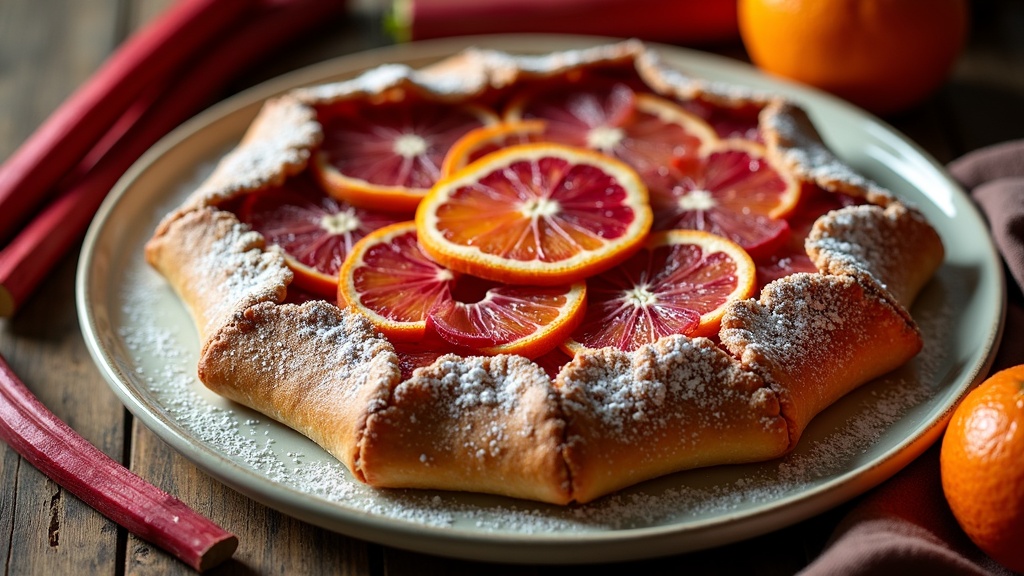
Rhubarb Meets Blood Orange: The Galette That Bridges Winter and Spring

Picture this: it's late February, the light is starting to linger a little longer in the afternoons, and you're standing at Jean-Talon Market wondering what to bake. The winter citrus is still going strong — blood oranges in their jeweled prime, the last of the lemons — but you're also seeing the first forced rhubarb, those shocking pink stalks that signal spring is coming, even if the calendar says otherwise.
That's the moment this galette was born.
Rhubarb and Blood Orange: Why This Works Right Now
Here's what I'm thinking: we're living in the in-between. Winter hasn't fully released us, but spring is tapping on the window. Your kitchen needs a bake that honors both seasons — the bright acidity of blood orange (winter's gift), the tart, almost floral edge of forced rhubarb (spring's promise).
This galette is exactly that.
The rhubarb brings tartness and a shocking pink color that makes you stop and stare. The blood orange adds warmth, sweetness, and a visual depth — those deep crimson slices against the pale pink rhubarb. Together, they're not fighting. They're completing each other. The tartness of the rhubarb cuts through the richness of the buttery pastry. The sweetness of the orange balances the rhubarb's edge. It's a conversation between seasons.
And the vibe? Rustic, golden, imperfect in the most beautiful way. The edges of the pastry will be rough. The fruit will bubble up unevenly. Some slices will caramelize more than others. That's not a mistake. That's the whole point.
Why This Moment Matters
Forced rhubarb is a window. It exists for maybe four weeks — from mid-February through early March — before the outdoor rhubarb starts growing and the forced stuff disappears. If you want to bake with it, now is the time. Not in April. Not in May. Now.
Blood oranges are the same. They're here through March, maybe early April, and then they're gone for another year. So if you've been thinking "I should bake with blood oranges," this weekend is your moment. Don't wait.
That's the whole philosophy of seasonal baking: you don't bake what you want to bake. You bake what the season is offering you. And right now, the season is offering something gorgeous.
The Galette Approach
I chose a galette over a tart for a reason. Galettes are forgiving. You don't need a tart pan. You don't need perfect edges. You just need a piece of parchment, some pastry, and the confidence to let it be rustic. That's the whole energy of this bake.
The filling is simple: rhubarb cut into 1-inch pieces, blood orange slices (thin, with a bit of the pith removed so they're not too bitter), a touch of honey to bridge the tartness, and a whisper of vanilla. That's it. No cornstarch thickener needed — the fruit will release its own liquid and create a jammy filling as it bakes.
The pastry is a basic galette dough: flour, cold butter, salt, ice water. Ten minutes of work. You're not trying to impress anyone with technique. You're just making something delicious and beautiful.
Tips for Making It Yours
- Keep your pastry cold. Cold butter = flaky pastry. This is the only technique that matters. Everything else is forgiving.
- Don't peel the blood oranges. Leave the white pith on — it adds structure and prevents the slices from falling apart. The pith also adds a subtle bitterness that balances the sweetness.
- Arrange, don't stress. The fruit doesn't need to be perfect. In fact, the more casual the arrangement, the better it looks. Overlap the rhubarb and orange slices. Let them fall where they want.
- Egg wash is optional. If you want a glossy, golden finish, brush the pastry edges with a beaten egg before baking. If you want a matte, rustic look, skip it. Both are gorgeous.
- Bake until the edges are deeply golden. This usually takes 35-40 minutes at 400°F. The pastry should be crispy and caramelized, not pale. Don't pull it out early.
- Let it cool before serving. I know it's hard. But the filling needs 10-15 minutes to set, or it'll be too jammy to slice cleanly. Serve it warm, not hot, with a dollop of crème fraîche or a scoop of vanilla ice cream.
The Recipe
For the Galette Dough
- 1½ cups all-purpose flour
- ½ teaspoon salt
- ½ cup (115g) cold butter, cubed
- 4-6 tablespoons ice water
For the Filling
- 4-5 stalks forced rhubarb, cut into 1-inch pieces (about 2 cups)
- 3 blood oranges, thinly sliced
- 3 tablespoons honey
- 1 teaspoon vanilla extract
- Pinch of sea salt
For Assembly
- 1 egg, beaten (optional, for egg wash)
- 1 tablespoon coarse sugar (optional)
Instructions
- Make the dough: In a bowl, whisk together flour and salt. Add cold butter cubes and use a pastry cutter or your fingertips to work the butter into the flour until the mixture looks like coarse breadcrumbs — some pea-sized pieces of butter should still be visible.
- Add water gradually: Sprinkle ice water over the mixture, 1 tablespoon at a time, tossing gently with a fork until the dough just comes together. Don't overwork it. It should be shaggy, not smooth.
- Chill: Form the dough into a disk, wrap in plastic, and refrigerate for at least 30 minutes (or up to 2 days).
- Prepare the filling: In a bowl, combine rhubarb, blood orange slices, honey, vanilla, and salt. Let it sit for 5 minutes so the fruit starts to release its juices.
- Roll out the dough: On a piece of parchment paper, roll the dough into a rough 12-inch circle, about ¼ inch thick. It doesn't need to be perfect — rustic is the goal.
- Arrange the fruit: Leave a 2-inch border around the edge. Pile the fruit in the center, letting some of the liquid stay in the bowl (too much liquid = soggy pastry). Arrange the slices casually, overlapping them.
- Fold the edges: Fold the pastry border up and over the fruit, creating loose pleats. Some fruit will be covered, some exposed. This is right.
- Chill again: Refrigerate the assembled galette for 15 minutes while you preheat the oven to 400°F.
- Egg wash (optional): Brush the pastry edges with beaten egg and sprinkle with coarse sugar if you like.
- Bake: Bake for 35-40 minutes, until the pastry is deeply golden and the fruit is bubbling at the edges. If the pastry is browning too quickly, tent with foil.
- Cool: Let the galette cool on the baking sheet for 10-15 minutes before serving. This helps the filling set.
What You're Creating
When you pull this out of the oven, your kitchen is going to smell like caramelized fruit and butter. The pastry will be golden and crispy. The rhubarb will have softened into jammy sweetness. The blood orange slices will have released their juice and created this beautiful, glossy filling.
It's the kind of bake that looks like you spent hours on it. It's the kind of bake that makes people stop mid-conversation and ask for the recipe. It's the kind of bake that tastes like a specific moment in time — that in-between space when winter is loosening its grip and spring is just starting to whisper.
That's what we're baking this weekend.
Go to Jean-Talon. Find the forced rhubarb. Find the blood oranges. Bring them home. Make this galette. Let your kitchen smell like the bridge between seasons.
C'est magnifique.