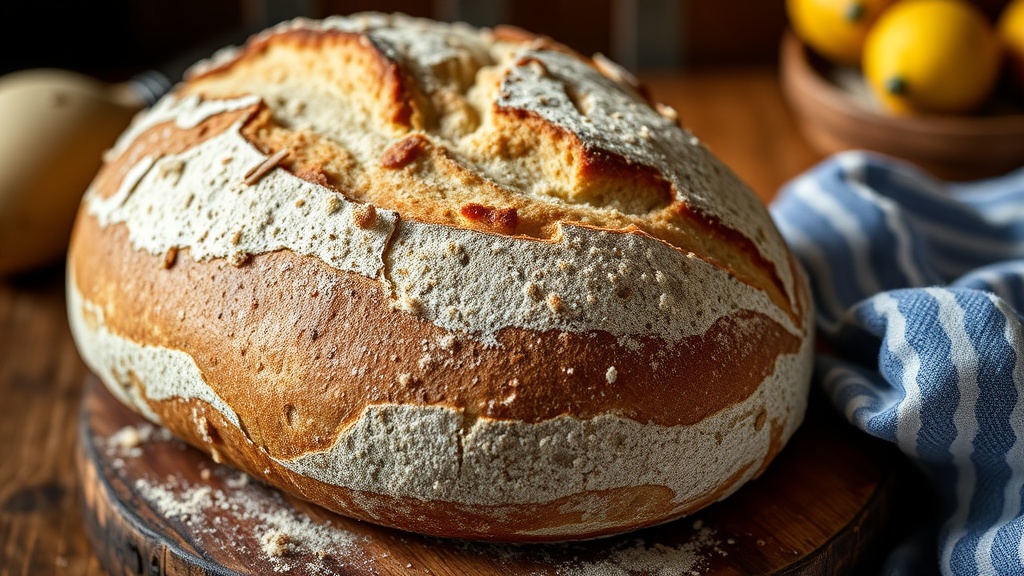
Mastering the Perfect Artisan Sourdough Loaf at Home

Artisan sourdough baking transforms a handful of flour, water, and salt into a crusty, flavorful loaf with an open crumb and complex tang. This guide walks through the entire process—from building a starter to pulling a golden boule from the oven. Whether you're a complete beginner or someone who's struggled with dense, flat results, these techniques will help you achieve bakery-quality bread in your own kitchen.
What Do You Need to Start Baking Sourdough Bread?
You'll need just a few tools and ingredients to get started. The beauty of sourdough lies in its simplicity—no commercial yeast required, no fancy additives.
The Starter: Your Living Ingredient
A sourdough starter is a fermented mixture of flour and water that captures wild yeast from the environment. Think of it as a pet that needs feeding. Most bakers keep theirs in a Weck jar or a simple glass container with a loose lid.
To build a starter from scratch, mix equal parts whole wheat flour and water (50g each) in a clean jar. Let it sit at room temperature for 24 hours. Discard half, then feed with 50g all-purpose flour and 50g water daily. Within 5-7 days, you'll see bubbles, smell a pleasant sour aroma, and watch the mixture double in size after feeding. That's when it's ready to bake with.
Basic Equipment Checklist
- Dutch oven — A Lodge 5-quart cast iron model works beautifully for trapping steam
- Kitchen scale — The Oxo Good Grips scale measures in grams for precision
- Bench scraper — For dividing and shaping dough
- Banneton basket — Helps the loaf hold its shape during the final rise
- Lame or sharp razor — For scoring decorative patterns before baking
- Parchment paper — Makes transferring dough into a hot Dutch oven safer
Here's the thing—you don't need everything at once. A Dutch oven and a scale are non-negotiable. The rest can come later as your obsession grows.
How Long Does It Really Take to Make Sourdough Bread?
From mixing to slicing, expect about 24 hours. Most of that is hands-off fermentation time—mixing takes 10 minutes, shaping another 10, and baking about 45. The rest is waiting (and the occasional stretch-and-fold).
Timing matters in sourdough. The dough moves at its own pace depending on your kitchen temperature. A warm summer day in Montréal might have dough ready in 3 hours. A drafty winter apartment? Could take 6. Professional bakers use the King Arthur Baking method of watching the dough, not the clock.
The Autolyse: A Quiet Beginning
Mix just the flour and water first. Let them rest for 30 minutes to an hour. This step—called autolyse—allows the flour to fully hydrate and gluten to start developing on its own. The dough becomes more extensible, easier to work with, and the final crumb stays more open.
After autolyse, add your ripe starter and salt. The salt goes in later because it tightens gluten, and you want that initial hydration to happen freely.
Bulk Fermentation: Where Magic Happens
The bulk ferment is when the starter does its work—producing carbon dioxide that inflates the dough. During this 3-5 hour window, you'll perform stretch-and-folds every 30 minutes for the first 2 hours.
Wet your hand, reach under the dough, grab the far side, and pull up and over. Rotate the bowl 90 degrees. Repeat three more times. That's one set. You're building strength without kneading—letting time and tension do the work.
The catch? Under-fermented dough produces dense, gummy bread. Over-fermented dough turns into a sloppy puddle. Look for the dough to have increased in volume by 50%, show bubbles on the surface, and feel airy when you poke it gently.
| Sign | Under-Proofed | Perfect | Over-Proofed |
|---|---|---|---|
| Volume increase | Less than 30% | 50-70% | More than double |
| Surface texture | Smooth, tight | Bubbly, jiggly | Deflated, slack |
| Poke test | Springs back immediately | Springs back slowly | Doesn't spring back |
| Baking result | Dense, tight crumb | Open, irregular holes | Flat, spread-out loaf |
Why Is My Sourdough Bread Dense and Gummy?
Density usually means the dough didn't ferment long enough or the starter wasn't active enough. Gumminess often comes from cutting into the loaf too soon—sourdough needs a full cooling period for the interior to set properly.
Starter readiness is the most common culprit. A starter that hasn't doubled after feeding won't have enough yeast power to leaven bread. Test it: drop a spoonful into water. If it floats, it's ready. If it sinks, give it another feeding and wait.
Shaping Techniques That Matter
After bulk fermentation, gently tip the dough onto a lightly floured counter. Don't punch it down—that's old-school thinking that destroys the structure you've built. Instead, use a bench scraper to divide (if making two loaves) and pre-shape into loose rounds.
Let the pre-shaped dough rest for 20-30 minutes. This bench rest relaxes the gluten, making final shaping easier. For a batard (oval loaf), gently pat into a rectangle, fold the sides to the center, then roll from the bottom up. For a boule (round loaf), do a series of envelope folds toward the center, then flip and drag toward you to tighten the surface tension.
Surface tension is everything. A taut "skin" on the loaf helps it rise upward instead of spreading outward. Place the shaped dough seam-side up in a floured banneton (or a bowl lined with a floured tea towel).
Cold Proofing: The Secret Weapon
Worth noting: an overnight cold proof in the refrigerator transforms good sourdough into great sourdough. The cold slows fermentation, allowing complex flavors to develop. It also firms the dough, making scoring easier and helping the loaf hold its shape.
Cover the banneton with a plastic bag (to prevent drying) and refrigerate for 12-24 hours. The dough can wait—life doesn't always accommodate baking schedules.
How Do You Bake Sourdough in a Home Oven?
Home ovens need help mimicking professional steam-injected decks. The Dutch oven method solves this beautifully. The enclosed space traps moisture from the dough, keeping the crust soft during the initial oven spring phase. Once you remove the lid, the crust browns and develops that satisfying crackle.
The Baking Process
Preheat your oven to 500°F (260°C) with the Dutch oven inside for at least 45 minutes. This thermal mass needs to be blazing hot. Carefully remove the pot, line with parchment, and gently tip your cold-proofed dough in. Score the top with a lame—one deep slash for an ear, or a decorative pattern.
Cover and bake for 20 minutes. Then remove the lid, drop the temperature to 450°F (232°C), and bake another 20-25 minutes until the crust is deep mahogany. The internal temperature should hit 208-210°F (97-98°C).
That said, resist the urge to slice immediately. The loaf needs at least 2 hours—preferably 4—to cool completely. The interior is still cooking, setting the crumb structure. Cut too early, and you'll have gummy streaks where the steam hasn't escaped.
Storing Your Creation
Store the completely cooled loaf cut-side down on a cutting board for the first day—it stays surprisingly fresh. After that, wrap in a linen bread bag or beeswax wrap. Never refrigerate sourdough; it accelerates staling.
For longer storage, slice and freeze in a zip-top bag. Toast individual slices straight from frozen. The flavor actually deepens over the first 24 hours, so day-two sourdough often tastes even better than fresh.
Troubleshooting Common Issues
Flat loaf? The dough was likely over-proofed or shaped too loosely. Dense crumb? Under-fermentation or inactive starter. Burnt bottom? Your Dutch oven conducts heat too aggressively—try placing it on a baking sheet or lowering the rack.
Every bake teaches something. Keep notes: fermentation time, kitchen temperature, flour brands, hydration percentage. Eventually, you'll feel the dough's readiness rather than timing it. That's when sourdough becomes less recipe and more intuition—a craft you shape with your hands, time, and patience.