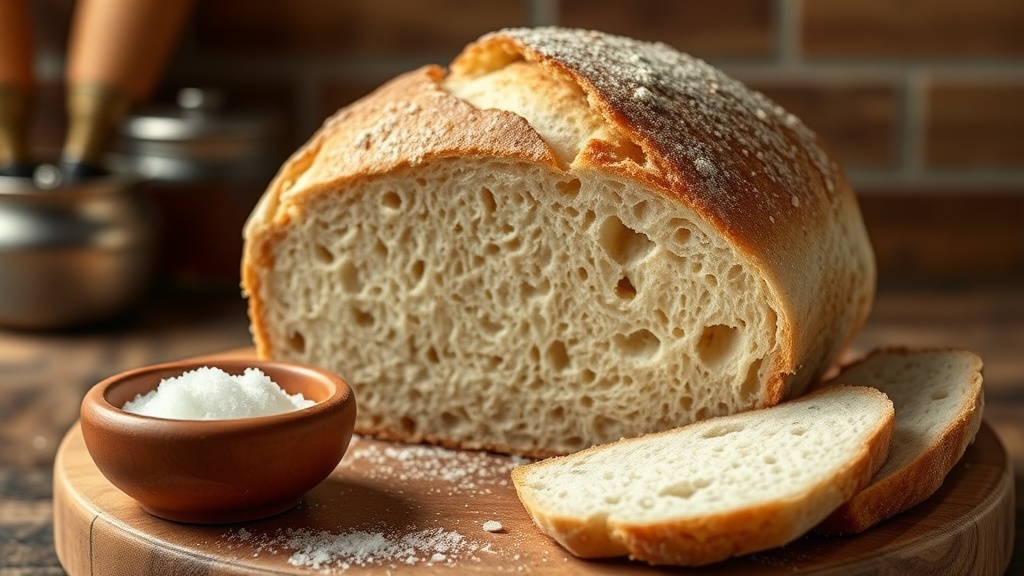
How to Make Perfect Sourdough Bread at Home: A Beginner's Guide

This guide covers everything needed to bake crusty, flavorful sourdough at home — from building a starter to shaping, scoring, and baking. Sourdough isn't just bread. It's a rewarding process that transforms simple flour and water into something alive, complex, and deeply satisfying. Whether you're tired of store-bought loaves or simply curious about the craft, you'll find a clear path forward here.
What Do You Need to Start Baking Sourdough?
Not much, honestly. The beauty of sourdough lies in its simplicity — four ingredients, a few tools, and patience.
The Ingredients
Flour, water, salt, and a living sourdough starter. That's it. No commercial yeast. No additives.
For flour, bread flour works beautifully — King Arthur Bread Flour is a solid choice with its higher protein content (12.7%). Many bakers blend in whole wheat or rye for deeper flavor. A 70/30 mix of white bread flour to whole wheat hits a nice balance. Water should be filtered or left out overnight to remove chlorine, which can inhibit fermentation. Any sea salt or kosher salt will do — avoid iodized table salt, as it can interfere with microbial activity.
The Equipment
A digital kitchen scale (the OXO Good Grips Stainless Steel Scale is accurate and durable), a large mixing bowl, a bench scraper, a proofing basket (banneton), a Dutch oven or combo cooker, and a lame or razor blade for scoring. Optional but helpful: a spray bottle for steam and an instant-read thermometer.
Here's the thing — you don't need a $300 Dutch oven. The Lodge 6-Quart Enameled Cast Iron Dutch Oven performs as well as premium brands for under $100. The key is thermal mass and a tight-fitting lid to trap steam during the initial bake.
How Do You Make and Maintain a Sourdough Starter?
Mix equal parts flour and water, wait for wild yeast to colonize it, then feed it regularly to keep it alive and active.
A starter is a living culture — wild yeast and lactobacilli that leaven the bread and create that signature tang. Building one from scratch takes 7-14 days. Here's a simple schedule:
- Day 1: Mix 50g whole wheat flour + 50g water. Cover loosely. Leave at room temperature (70-75°F).
- Day 2: Discard half. Add 50g flour + 50g water. Stir.
- Days 3-7: Repeat daily feedings. Look for bubbles, doubling in size, and a pleasant sour smell.
- By Day 7-10: The starter should double within 4-6 hours of feeding. It's ready.
The catch? Temperature matters enormously. A cold kitchen (below 65°F) slows everything down. In Montréal winters, many home bakers keep starters near the oven pilot light or on top of the refrigerator. During summer, the counter works fine.
Once established, store the starter in the refrigerator and feed it once a week. Before baking, pull it out, feed it, and wait for it to peak — that's when it's strongest and most active.
What's the Best Sourdough Recipe for Beginners?
A basic country loaf with 75% hydration — high enough for an open crumb, low enough to handle without frustration.
This formula yields one large loaf (or two smaller ones) and uses straightforward techniques. The Baker's Percentage method makes scaling easy:
| Ingredient | Weight | Percentage |
|---|---|---|
| Bread flour | 400g | 80% |
| Whole wheat flour | 100g | 20% |
| Water (warm, 85°F) | 375g | 75% |
| Salt | 10g | 2% |
| Active starter | 100g | 20% |
Mixing and Autolyse
Combine flours and water. Mix until no dry spots remain. Let rest 30-60 minutes. This rest — called autolyse — allows flour to fully hydrate and gluten to develop without kneading. The dough feels smoother, silkier afterward.
Adding Starter and Salt
Add the active starter. Squeeze and fold it in. Then add salt and a splash of reserved water — about 25g. Incorporate using the slap and fold technique or simple stretch-and-folds. The dough transforms from shaggy and sticky to cohesive and elastic within 5-10 minutes.
Bulk Fermentation
Cover the bowl. Let it rise at room temperature for 3-5 hours. During the first 2 hours, perform 3-4 sets of stretch-and-folds — every 30 minutes, grab one side of the dough, stretch it up, fold it over itself. Rotate the bowl. Repeat.
Worth noting: fermentation timing depends entirely on temperature and starter strength. A dough at 75°F might be ready in 3 hours. At 65°F, it could take 6. Watch the dough, not the clock. It's ready when it looks puffy, jiggles when shaken, and has increased by 50-75% in volume.
Pre-shaping and Bench Rest
Gently tip the dough onto a lightly floured surface. Shape it into a loose round — don't degas it completely. Let it rest 20-30 minutes. The dough relaxes, making final shaping easier.
Final Shaping
Flip the dough seam-side up. Fold the bottom third up, then each side toward the center. Roll from the top down, creating surface tension. Place seam-side up in a floured banneton.
Cold Proof
Cover and refrigerate 12-24 hours. The cold slows fermentation, develops flavor, and firms the dough — making scoring cleaner and oven spring more dramatic. You can bake same-day (after 2-3 hours at room temperature), but the overnight cold proof yields better results.
How Do You Bake Sourdough Without a Steam Oven?
Use a preheated Dutch oven — the enclosed environment traps the dough's own moisture, creating steam that keeps the crust soft long enough for the loaf to expand fully.
Preheat the Dutch oven (with its lid) at 500°F for at least 45 minutes. Carefully transfer the cold-proofed dough onto parchment paper, then lower it into the hot pot. Score the top with a sharp blade — a single deep slash or a decorative pattern. Cover and bake 20 minutes.
Remove the lid. Drop the temperature to 450°F. Bake another 20-25 minutes until the crust is deep amber — almost burnt-looking. That dark color equals flavor.
That said, steam isn't just for expansion. It gelatinizes the starches on the surface, creating that signature glossy, crackly crust. Without it, you get a pale, thick, tough exterior. The Dutch oven solves this perfectly for home bakers.
What Are Common Sourdough Mistakes — and How Do You Fix Them?
Most failures stem from timing, temperature, or handling. The good news? Every loaf teaches something.
| Problem | Cause | Solution |
|---|---|---|
| Flat, dense loaf | Underproofed or overproofed | Watch for the poke test — dough should spring back slowly, not immediately or not at all |
| Gummy interior | Underbaked or cut too soon | Bake to 208-210°F internal temp; cool completely (2+ hours) before slicing |
| Thick, tough crust | Insufficient steam or overbaking | Use a Dutch oven; don't bake beyond deep amber color |
| No oven spring | Weak starter or improper scoring | Ensure starter doubles reliably; score at a 45° angle, 1/2 inch deep |
| Excessively sour taste | Overfermentation | Shorten bulk fermentation; use younger starter (fed 4-6 hours ago) |
Here's the thing about the poke test — it's the most reliable readiness indicator. Wet your finger. Press the dough halfway in. If it springs back immediately, it needs more time. If it stays indented, it's ready. If it collapses, you've gone too far. (Don't panic — overproofed dough makes excellent pizza or crackers.)
Scoring Technique
The blade angle matters. A straight 90° cut creates an "ear" — that lifted flap of crust prized by Instagram bakers. A shallow 20° cut opens the loaf without much lift. For beginners, a simple deep slash at 45° gives reliable expansion and a rustic look.
Storing and Enjoying Your Bread
Cool the loaf completely on a wire rack — at least 2 hours. Cutting into warm bread ruins the texture (and makes slicing impossible).
Store crust-side down, uncovered, for the first day. The crust protects the interior. After that, a paper bag or bread box works for 2-3 days. For longer storage, slice and freeze in a sealed bag. Toast directly from frozen — the texture revives beautifully.
Sourdough stays fresh longer than commercial bread thanks to its acidity and lack of preservatives. A well-made loaf tastes excellent on day three — something you can't say for supermarket sandwich bread.
"Bread deals with living things, with giving life, with growth, with the seed, the grain that nurtures. It's not coincidence that we say bread is the staff of life." — Lionel Poilâne
The journey from flour, water, and salt to a crackling, fragrant loaf takes time. Days for the starter. Hours for fermentation. Patience during cooling. But the reward — tearing into a slice still faintly warm from the toaster, butter melting into its irregular holes — makes every moment worthwhile. Start tonight. Feed that starter. By the weekend, your kitchen will smell like a Montréal boulangerie at dawn.
Steps
- 1
Prepare and Feed Your Sourdough Starter
- 2
Mix the Dough and Perform Stretch and Folds
- 3
Shape, Proof, and Bake to Perfection