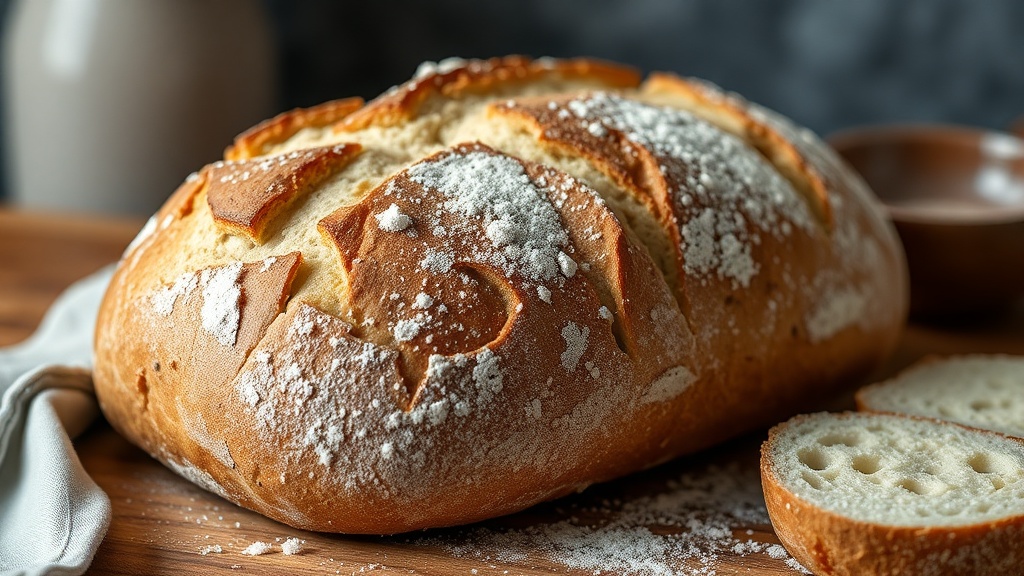
How to Make Perfect Sourdough Bread: A Beginner's Complete Guide

What Makes Sourdough Different from Regular Bread?
Sourdough bread relies on wild yeast and naturally occurring bacteria—rather than commercial yeast—to leaven and flavor the loaf. This ancient method produces bread with deeper flavor, better keeping qualities, and (for many) easier digestion. This guide covers everything from building your first starter to pulling a golden, crackling loaf from the oven—no prior experience needed.
How Do You Create and Maintain a Sourdough Starter?
A sourdough starter is a simple mixture of flour and water that captures wild yeast from the environment. It takes roughly 7–10 days of daily feeding before it's strong enough to bake with.
Day-by-Day Starter Development
You'll need a digital kitchen scale, a glass jar (the Weck 745 Mold Jar works beautifully), and unbleached flour. Here's the thing—whole wheat flour jumpstarts fermentation faster than all-purpose because it contains more wild yeast on the bran.
- Day 1: Mix 50g whole wheat flour with 50g water. Stir until smooth. Cover loosely.
- Day 2: Discard half (about 50g). Add 50g flour and 50g water. Stir.
- Days 3–7: Repeat the discard-and-feed cycle every 24 hours. Look for bubbles and a pleasant sour smell.
- By Day 7: Your starter should double in size within 4–6 hours of feeding. That's when it's ready.
The catch? Temperature matters enormously. Keep your starter between 70–75°F (21–24°C). In Montréal winters, that might mean finding a cozy spot near the radiator. In summer, the counter works fine.
Maintaining Your Starter Long-Term
Once established, you have options. Daily bakers keep starters at room temperature and feed every 24 hours. Weekend bakers store theirs in the refrigerator, feeding weekly. Worth noting—cold storage slows fermentation dramatically, but the starter stays alive for months with minimal attention.
"A sourdough starter is a living thing. It needs regular nourishment, observation, and patience. Treat it well, and it'll outlive you." — Chad Robertson, Tartine Bakery
What Equipment Do You Actually Need for Sourdough Baking?
Minimal equipment produces excellent results—though a few specific tools make the process smoother and more consistent.
| Tool | Why It Helps | Budget Alternative |
|---|---|---|
| Lodge Combo Cooker | Creates steamy baking environment; preheats faster than Dutch ovens | Any heavy pot with tight-fitting lid |
| Digital Kitchen Scale | Baking by weight ensures consistent results | Escali Primo—accurate to 1g, under $30 |
| Banneton Basket | Supports dough shape during final rise; creates decorative flour pattern | A linen-lined mixing bowl |
| Dough Scraper | Cuts and moves sticky dough without tearing | OXO Bench Scraper |
| Lame | Scores dough cleanly for controlled oven spring | Sharp razor blade on a coffee stirrer |
That said, don't let equipment stop you. The King Arthur Baking basic sourdough recipe works with nothing but a bowl, wooden spoon, and baking sheet.
How Do You Mix, Fold, and Shape Sourdough?
The process spans roughly 24 hours from starter feeding to pulling bread from the oven—though active working time is under 30 minutes.
Mixing and Autolyse
Combine flour and water first. Let them rest 30 minutes to 2 hours. This process—called autolyse—allows flour to fully hydrate and gluten to begin developing without any kneading. You'll notice the dough becomes smoother and more elastic just from sitting.
Bulk Fermentation and Folds
After adding your active starter and salt, the dough enters bulk fermentation—typically 3–5 hours at room temperature. Instead of kneading, you'll perform stretch and folds every 30 minutes for the first 2 hours.
Here's how: Wet your hand. Grab one edge of the dough. Stretch it upward and fold over the center. Rotate the bowl 90 degrees. Repeat three more times. That's one set. The dough starts shaggy and sticky. By the third set, it feels alive—smooth, elastic, holding its shape.
Pre-shaping and Bench Rest
Turn the dough onto a lightly floured surface. Gently shape it into a loose round—don't deflate it completely. Let it rest 20–30 minutes. This bench rest relaxes gluten, making final shaping easier.
Final Shaping
Flip the dough seam-side up. Fold the bottom third up. Fold each side toward the center. Roll the whole thing into a tight log or round. The surface tension you create here determines how well the loaf rises in the oven.
What's the Best Way to Bake Sourdough at Home?
Home ovens need help mimicking professional steam-injected decks. Steam keeps the crust soft during the initial rise—called oven spring—allowing the loaf to expand fully before the crust hardens.
The Dutch Oven Method
Preheat your Lodge Combo Cooker or Le Creuset Dutch oven at 450°F (232°C) for at least 45 minutes. Carefully transfer your shaped dough (seam-side down) onto parchment paper. Score the top with a lame or razor—one deep slash works, or create an intricate ear with a curved cut. Lower the dough into the hot pot. Cover. Bake 20 minutes.
Remove the lid. The loaf should have sprung dramatically, pale and blistered. Continue baking 20–25 minutes until deeply golden—almost burnt-looking. That dark color equals flavor.
Alternative: The Baking Steel Method
If you own a Baking Steel, preheat it with a roasting pan on the rack below. Transfer dough onto the steel. Immediately pour 1 cup boiling water into the roasting pan. Close the door quickly. Steam billows. Bake 20 minutes, then remove the water pan and finish uncovered.
For detailed baking science, The Perfect Loaf offers exceptional deep-dives on temperature control and steam generation.
Why Is My Sourdough Dense, Gummy, or Flat?
Most sourdough failures stem from one of three issues: under-fermentation, weak starter, or poor shaping technique.
Reading the Signs
- Dense, gummy crumb: Under-proofed. The dough needed more time during bulk fermentation. Look for 50–75% volume increase—not doubling, but significant puffiness.
- Flat, spread-out loaf: Over-proofed or weak starter. The yeast exhausted its food. Next time, refrigerate the dough 12–24 hours for easier handling and better flavor.
- No oven spring: Insufficient surface tension during shaping, or the oven wasn't hot enough. Preheat longer. Score deeper.
The Poke Test
During final proofing, gently press a floured finger into the dough. Under-proofed dough springs back immediately. Properly proofed dough springs back slowly—partially. Over-proofed dough stays indented. That middle state—slow spring-back—is what you're chasing.
How Do You Store and Use Leftover Sourdough?
Fresh sourdough keeps at room temperature 3–4 days—longer than yeasted bread thanks to the acetic acid produced during fermentation. Store cut-side down on a cutting board (no bag needed) or wrap in a linen bread bag.
Revive stale slices by spritzing with water and toasting. Or transform them into pain perdu—French toast made with day-old bread soaked in custard, a staple at Montréal's Arthurs Nosh Bar on Notre-Dame Street.
Don't discard leftover starter during feedings. That "discard" makes incredible crackers, pancakes, and chocolate cake. Keep a jar in the fridge specifically for collection. Worth noting—unfed starter adds tangy complexity to baked goods without any leavening power needed.
Scheduling Your Bake
Here's the thing about sourdough—it bends to your schedule, not the other way around. The dough forgives. Mix in the evening. Stretch and fold before bed. Shape in the morning. Bake by noon. Or reverse it. Cold fermentation in the refrigerator (8–48 hours) actually improves flavor while buying you time.
Once you understand the rhythm—feed, mix, fold, shape, proof, bake—you'll stop following recipes and start reading the dough. It tells you what it needs. Bubbles along the edges signal readiness. A jiggly, airy texture means gluten development worked. The smell shifts from floury to fruity to tangy as fermentation progresses.
That first crackling loaf—pulled from your own oven, scented with wild fermentation, crust shattering as you slice—makes every failed attempt worthwhile. Keep baking.
Steps
- 1
Prepare and feed your active sourdough starter 4-6 hours before mixing
- 2
Mix flour and water, then perform stretch and folds to build gluten strength
- 3
Shape the dough, proof in banneton, and bake in a preheated Dutch oven