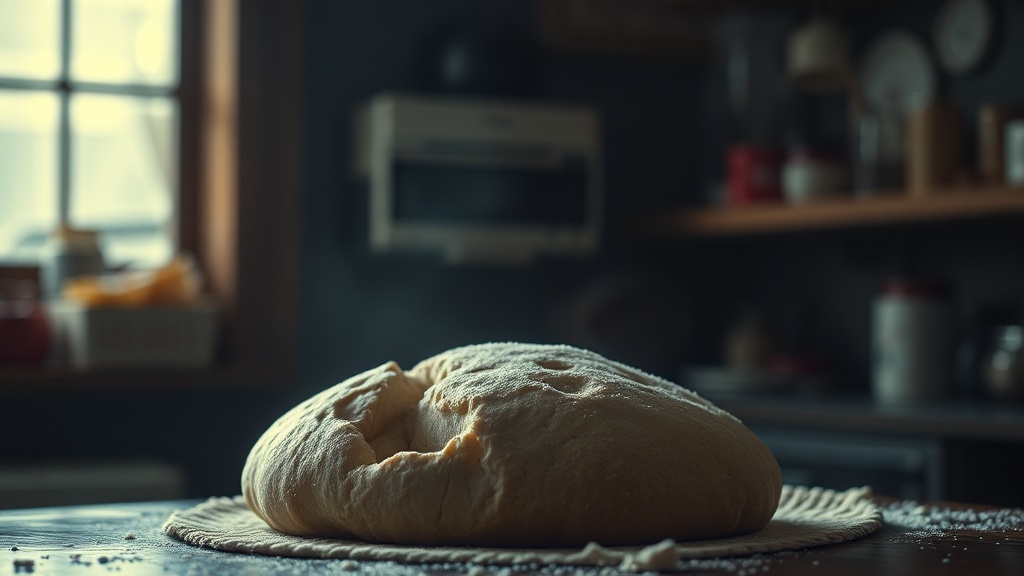
Beyond the Rise: Understanding Dough's Inner Structure

The Unseen Architect of Your Baked Goods
Imagine pulling a perfectly elastic pizza dough, stretching it thin without a single tear, or slicing into a baguette with that characteristic open, airy crumb. These moments of baking triumph aren't just about the recipe or the yeast; they're deeply rooted in something far less visible but incredibly influential: gluten. Gluten, a complex network of proteins formed when flour and water combine, acts as the internal scaffolding for nearly all your yeasted breads, many cakes, and most pastries. Understanding how to manipulate this structure isn't just for professional bakers; it’s for anyone who wants more control over their results, transforming inconsistent outcomes into predictable deliciousness.
This isn't about rigid rules, but about developing a feel for your dough — recognizing when it needs more kneading, when it craves rest, or when it demands a lighter touch. We’ll explore what gluten really is, why it matters so much to bakers, and how you can actively encourage or discourage its formation to suit your culinary goals, whether that’s a chewy ciabatta or a tender scone.
What exactly is gluten and why does it matter for bakers?
At its core, gluten isn't something you add to your dough; it’s something you create. Wheat flour contains two primary proteins: glutenin and gliadin. When you introduce water to flour, these two proteins begin to hydrate and bond, forming elastic strands. This network of protein strands is what we call gluten.
Think of it like a microscopic mesh — a flexible, extensible web throughout your dough. For bread, this elasticity is what allows the dough to capture the carbon dioxide gas produced by yeast, enabling it to rise. Without a strong gluten network, those gas bubbles would simply escape, leaving you with a dense, heavy loaf. The more you knead or mix, the more these strands align and strengthen, developing that characteristic chew and structure.
The type of flour you choose directly impacts your gluten potential. High-protein flours, like bread flour, contain more glutenin and gliadin, meaning they'll develop a stronger, more elastic gluten network — perfect for crusty breads and chewy bagels. Conversely, low-protein flours, such as cake flour, have less of these proteins, resulting in a tender, crumbly texture ideal for delicate cakes and pastries. It’s a foundational concept; once you grasp it, you begin to see why a single flour won't suit every baking project.
How can you control gluten development in your dough?
Controlling gluten is all about understanding the factors that influence its formation and strength. The two biggest players are hydration and mechanical action (kneading or mixing).
Hydration: Water is the Catalyst
Water is absolutely vital for gluten development. The more water available, the more easily the glutenin and gliadin proteins can hydrate and form bonds. This is why very wet doughs, like ciabatta or no-knead breads, often develop excellent gluten with minimal kneading — the high hydration does a lot of the work. Conversely, a very dry dough will be stiff and harder to work with, requiring more kneading to coax out a weaker gluten structure. A common mistake is not adding enough water, which can lead to a tough, underdeveloped dough.
Mechanical Action: The Kneading Conundrum
Kneading or mixing is the physical process that aligns and strengthens the gluten strands. When you knead dough, you’re essentially organizing those random protein bonds into an ordered, elastic network. This is what gives dough its characteristic elasticity and extensibility. The more you knead, the stronger the network becomes.
- For bread: You usually want a well-developed gluten network. This means extended kneading (either by hand or machine) until the dough passes the windowpane test — you can stretch a small piece of dough thin enough to see light through it without it tearing.
- For pastry or tender baked goods: You want to minimize gluten development. Overworking pie crust dough or biscuit dough will make it tough, not tender. Here, a light touch and minimal mixing are key, just enough to bring the ingredients together.
Autolysis, a technique where flour and water are mixed and allowed to rest before adding other ingredients, also aids gluten development by giving the proteins time to fully hydrate without the interference of salt or fat. This initial rest period can reduce the overall kneading time needed, and it's a practice many professional bread bakers swear by for improved crumb structure and flavor. You can read more about the science behind autolysis on resources like